


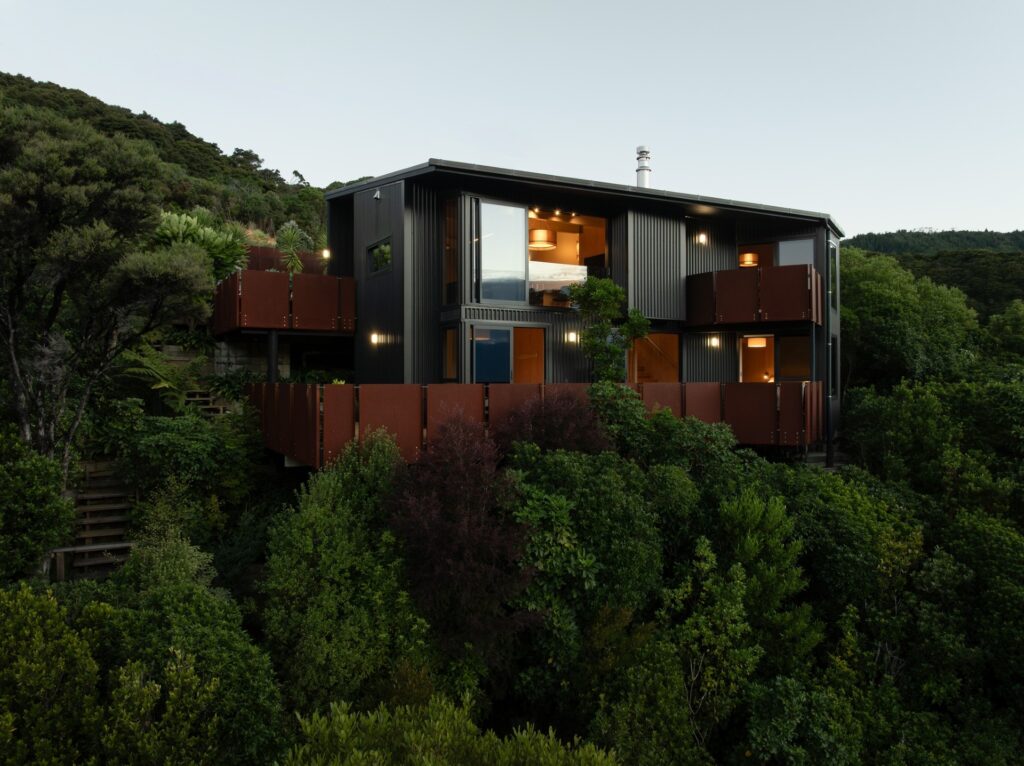
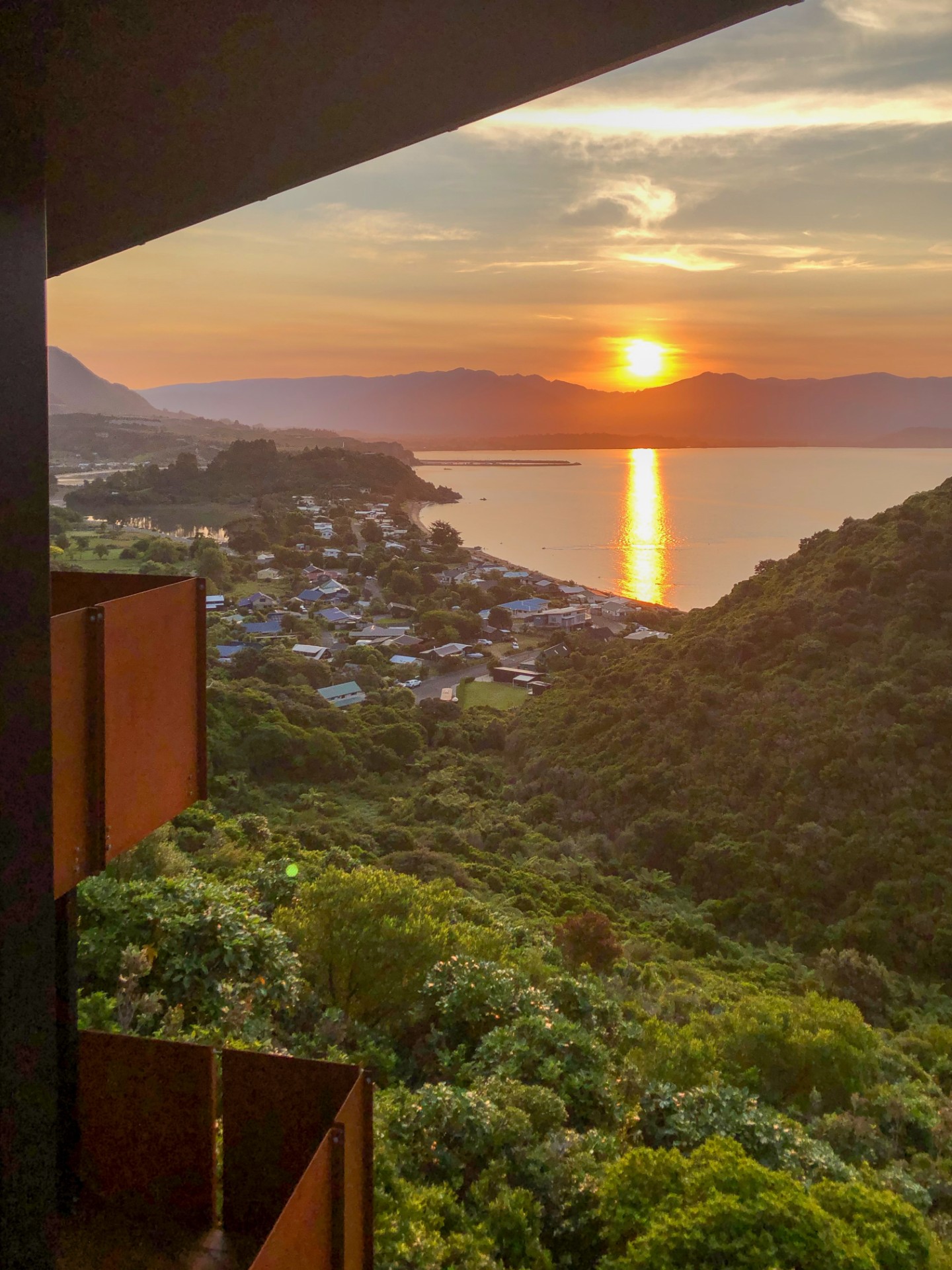
Wake to a chorus of native birds in the surrounding bush, and end the day watching the sun sink over Golden Bay. A peaceful bush retreat above Tata Beach designed for effortless coastal living. Read the project story below.
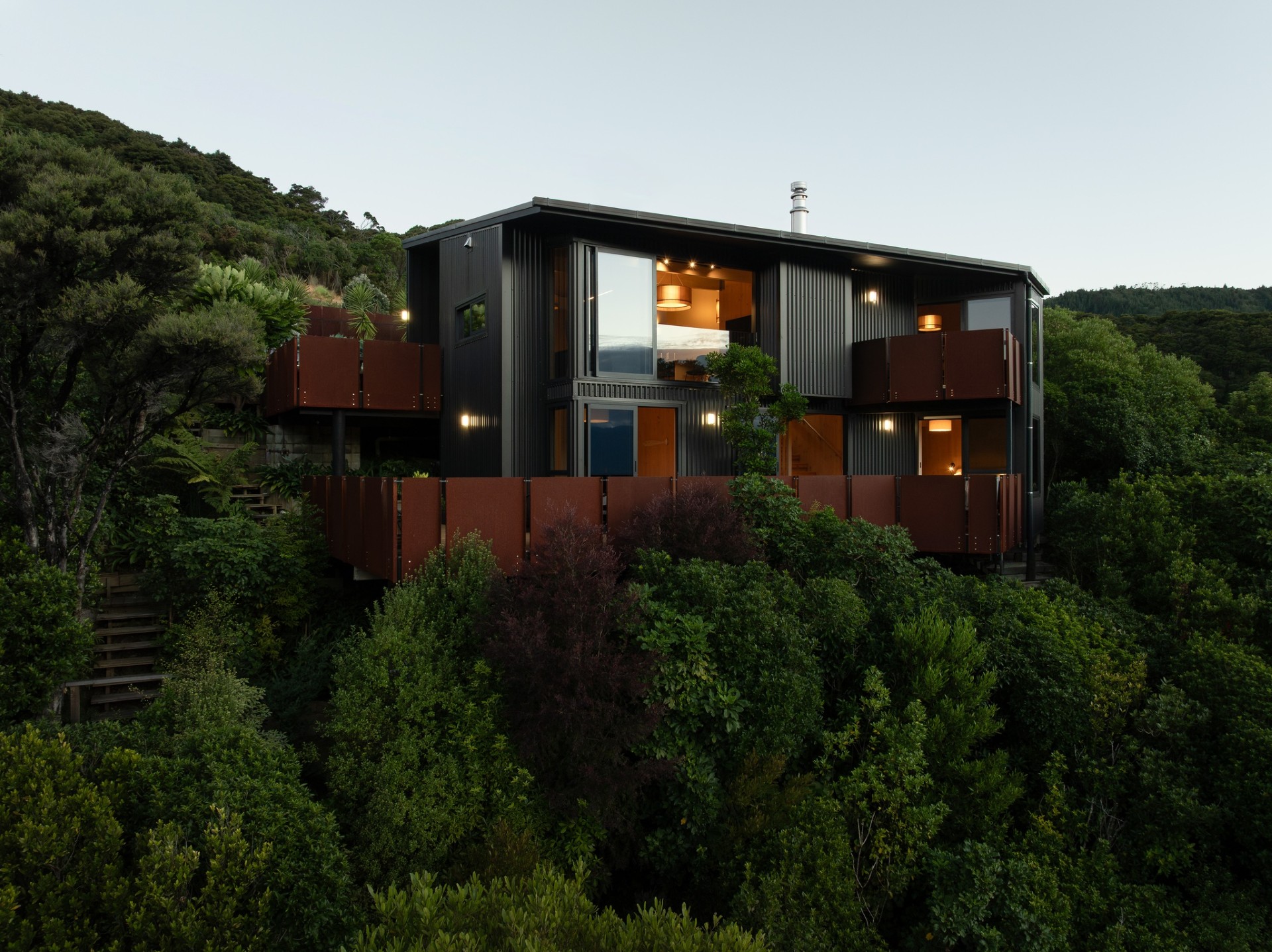
A high-performance coastal home
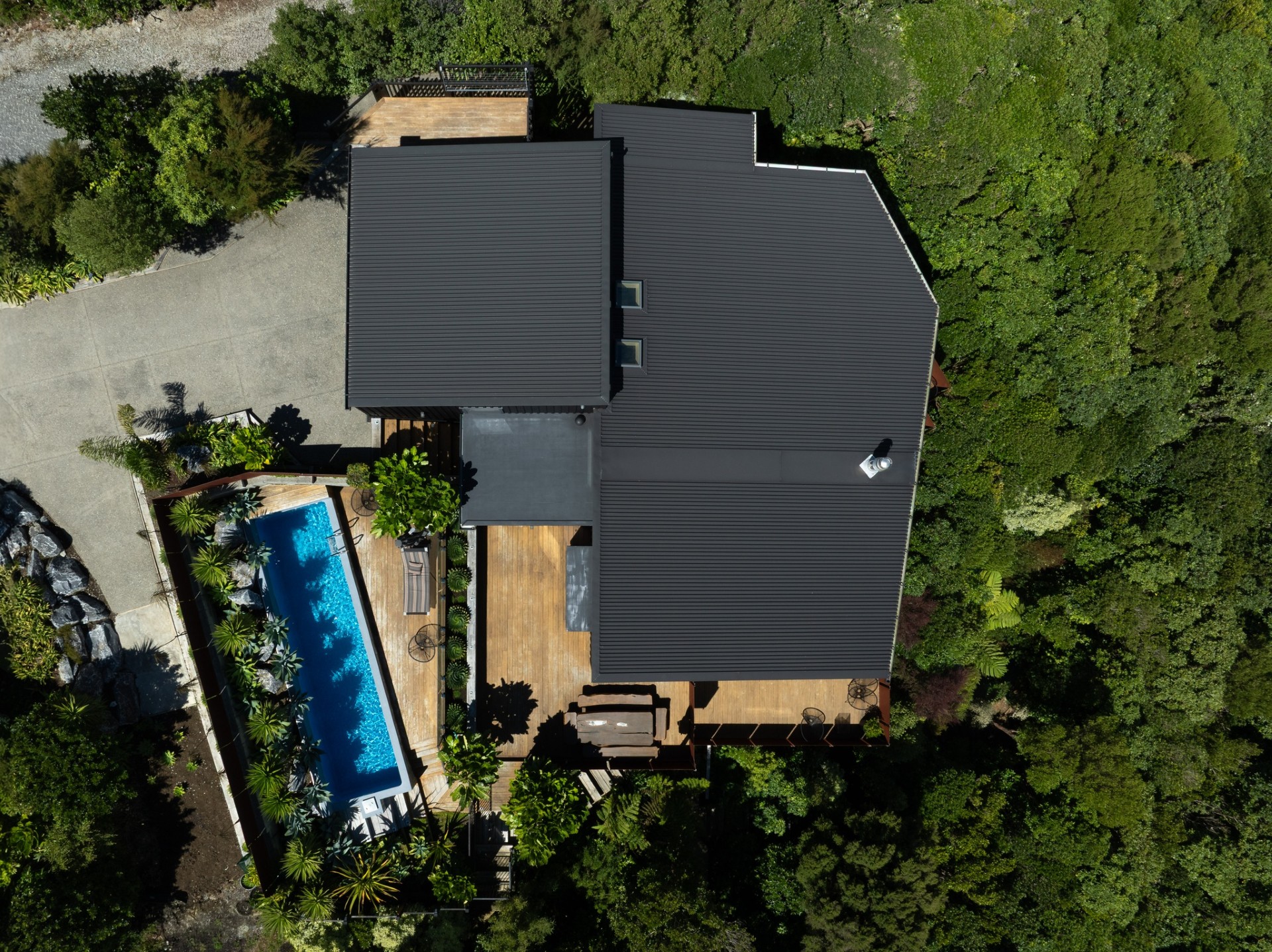
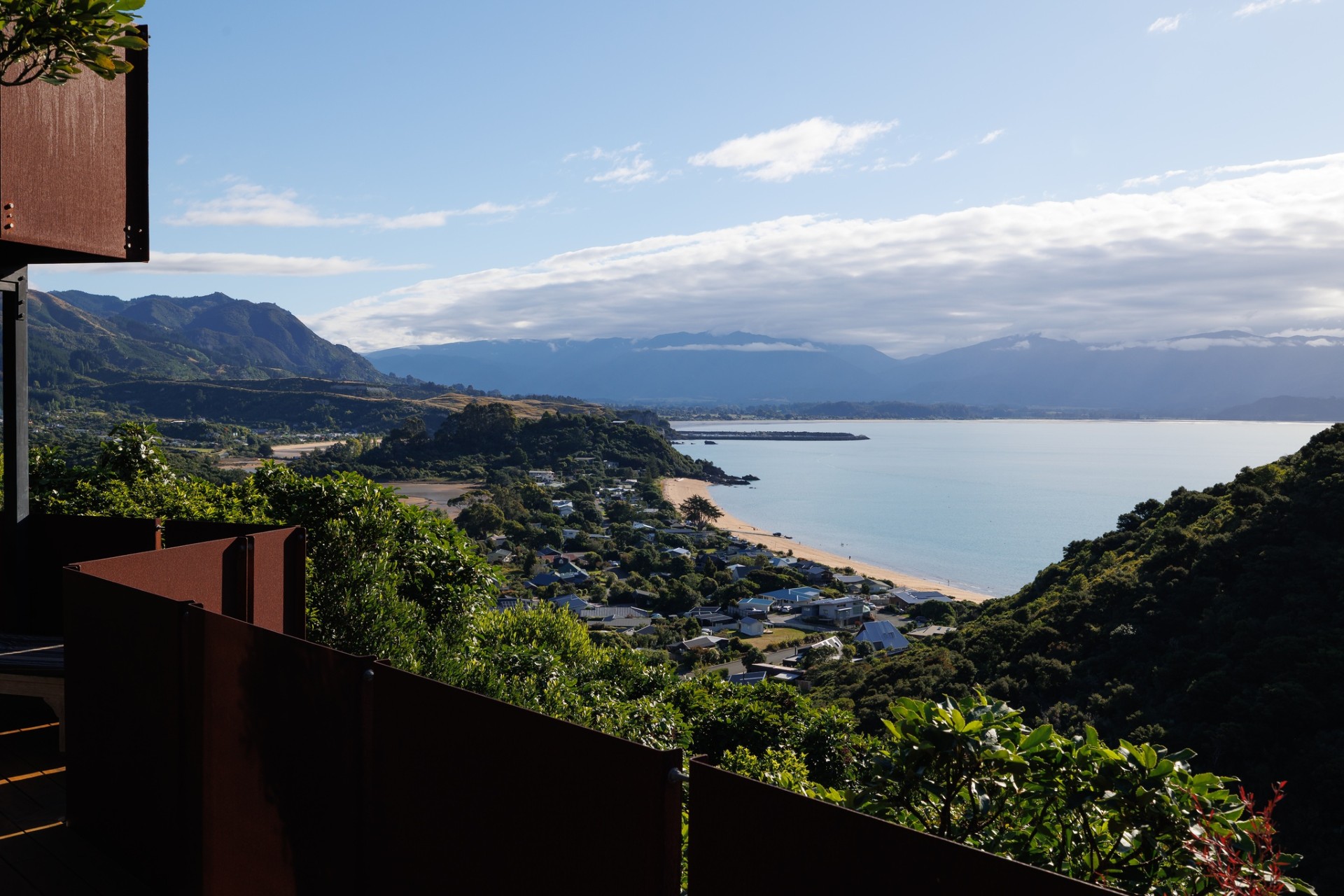
Designed for construction certainty, durability, and year-round comfort on a steep, remote bush-clad hillside above Tata Beach, this contemporary home is all about the view — and the reality of what it takes to build well in a remote coastal environment. The site is dramatic, access is limited, and the conditions are demanding. Those constraints shaped the project from the very beginning.
“A home that sits lightly on the land, yet opens fully to the stunning Tasman coastline.”
Project snapshot
-
Steep, bush-clad coastal site with limited access
-
Complex geotechnical + structural coordination
-
Prefabricated CLT structure to reduce on-site risk
-
Self-sufficient water + wastewater systems
-
High-performance envelope + careful glazing strategy
A complex site, carefully managed
Rather than treat the challenges as problems to “work around” later, we approached them as key design inputs. On a steep site, every decision has a knock-on effect — geotechnical strategy, structure, consenting, construction logistics, material durability, and long-term maintenance. For this project, being on top of the technical side wasn’t optional. It was fundamental to getting a reliable outcome.
From the outset, this was a project that needed a steady, methodical approach. The steep topography and sensitive setting meant early planning was critical, including geotechnical and structural strategy, and a careful consent pathway. In a location like this, the resource consent process can be complex, and the design needed to balance the coastal landscape, neighbourhood context, and long-term resilience.
The end result is a home that sits lightly on the land, maintains a strong connection to the bush, and still feels open to the coastline.
Why construction method mattered here
The home uses a pole foundation system to sit lightly on the land. This allowed the building to work with the slope while minimising disturbance to the bush-clad site.
A decision was made early to adopt Xlam’s Cross Laminated Timber ( CLT ) which presented a more efficient construction process.
Using CLT meant large wall, floor, and roof elements could be prefabricated off-site and assembled with precision once on location. In a place where labour, access and weather can all make conventional construction more difficult, prefabrication reduced on-site labour requirements and improved construction certainty — a major advantage for a technically complex build.
There was also a practical benefit to prefabrication: wall, floor and roof elements arrived with a high level of precision, reducing on-site rework and helping maintain quality control in a remote setting. The CLT structure is also robust and legible.
Warm structure inside, durable skin outside
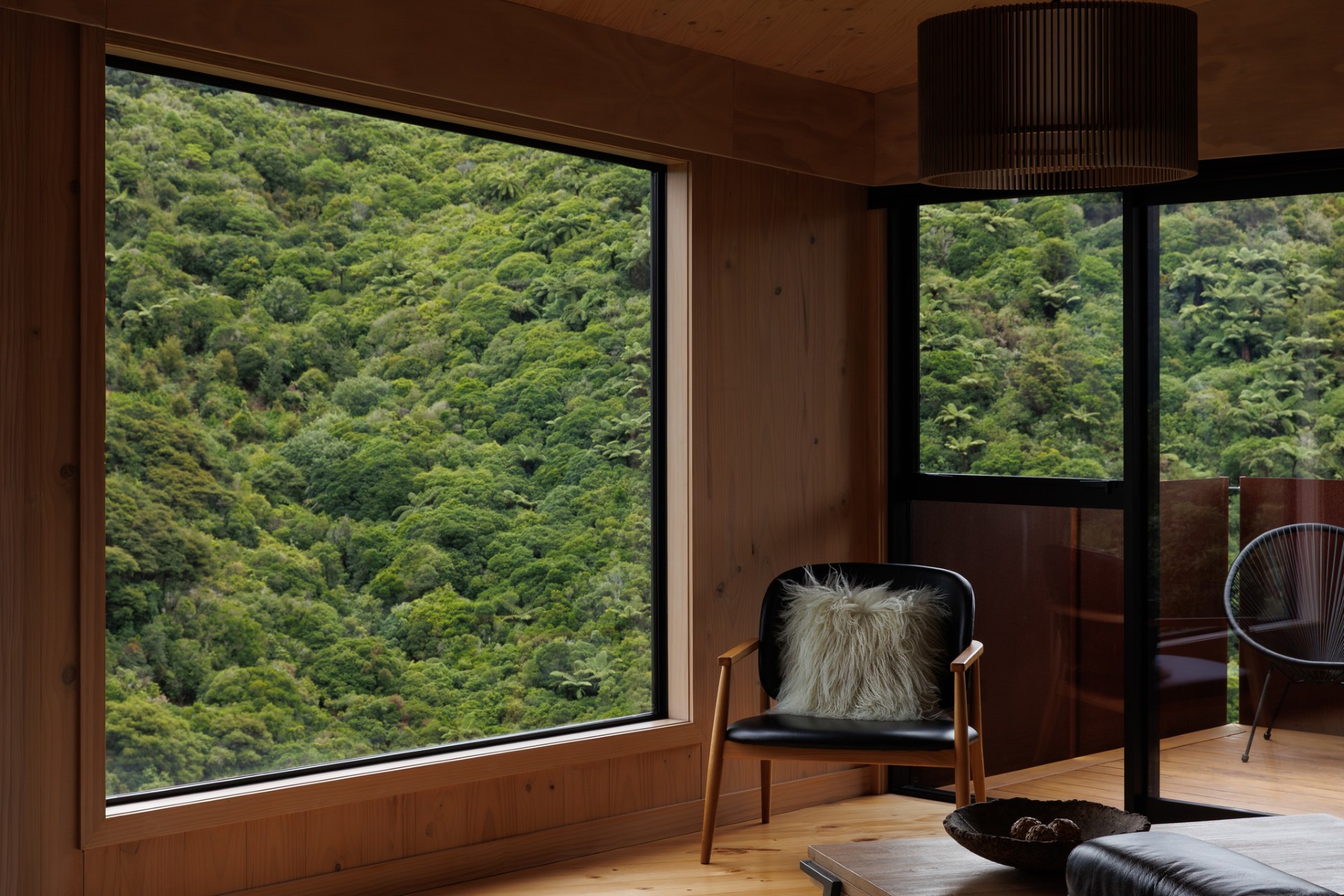
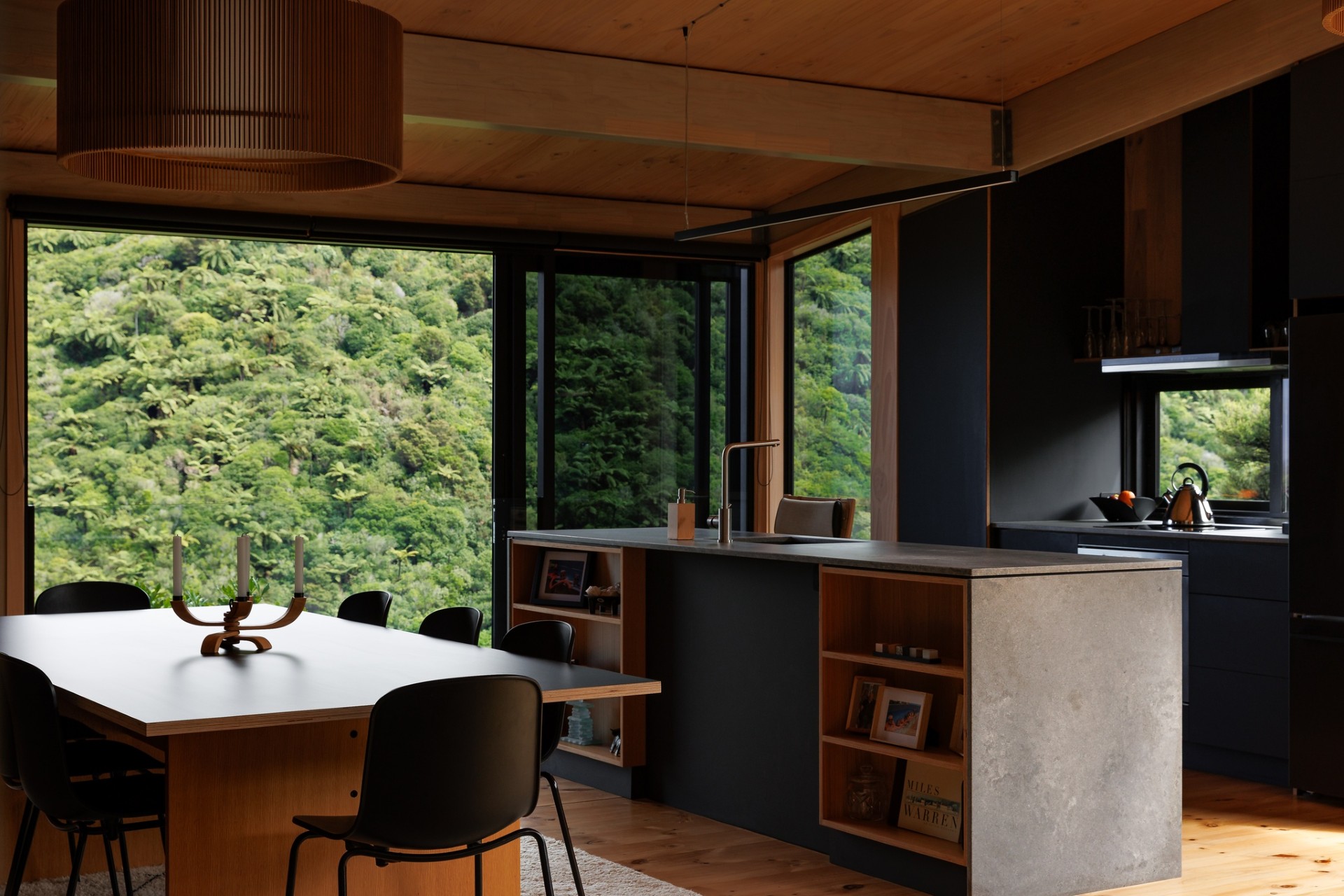
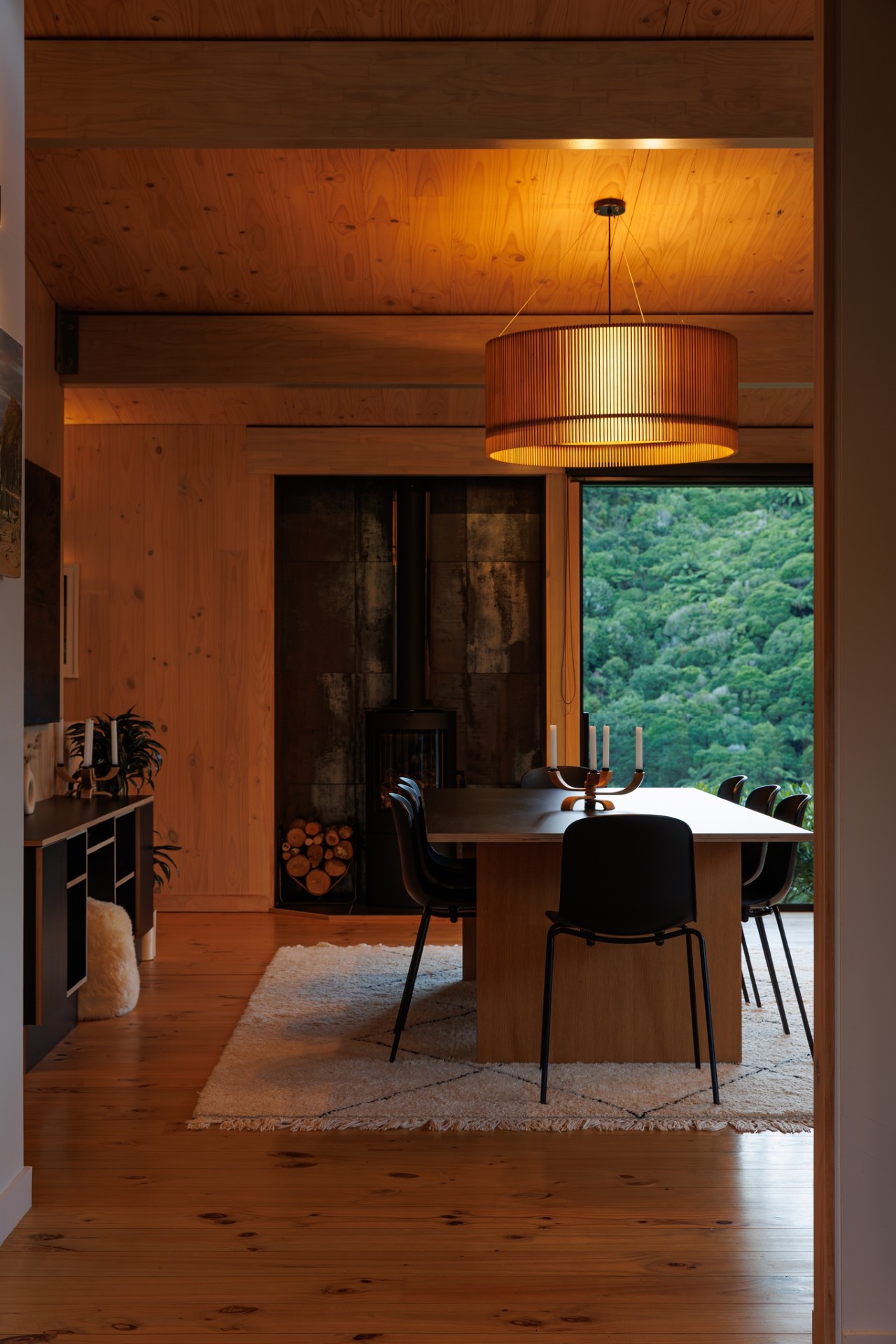
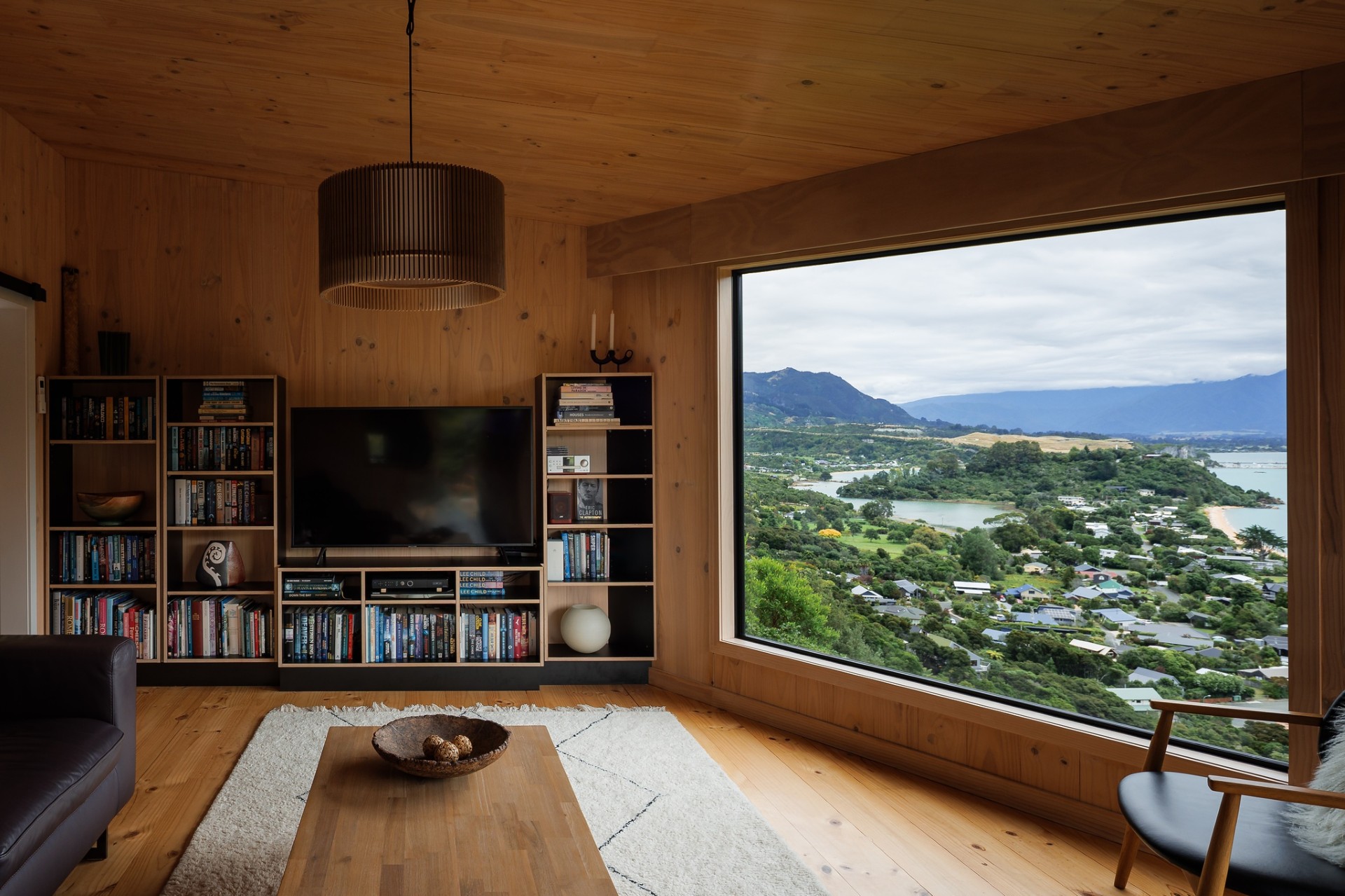
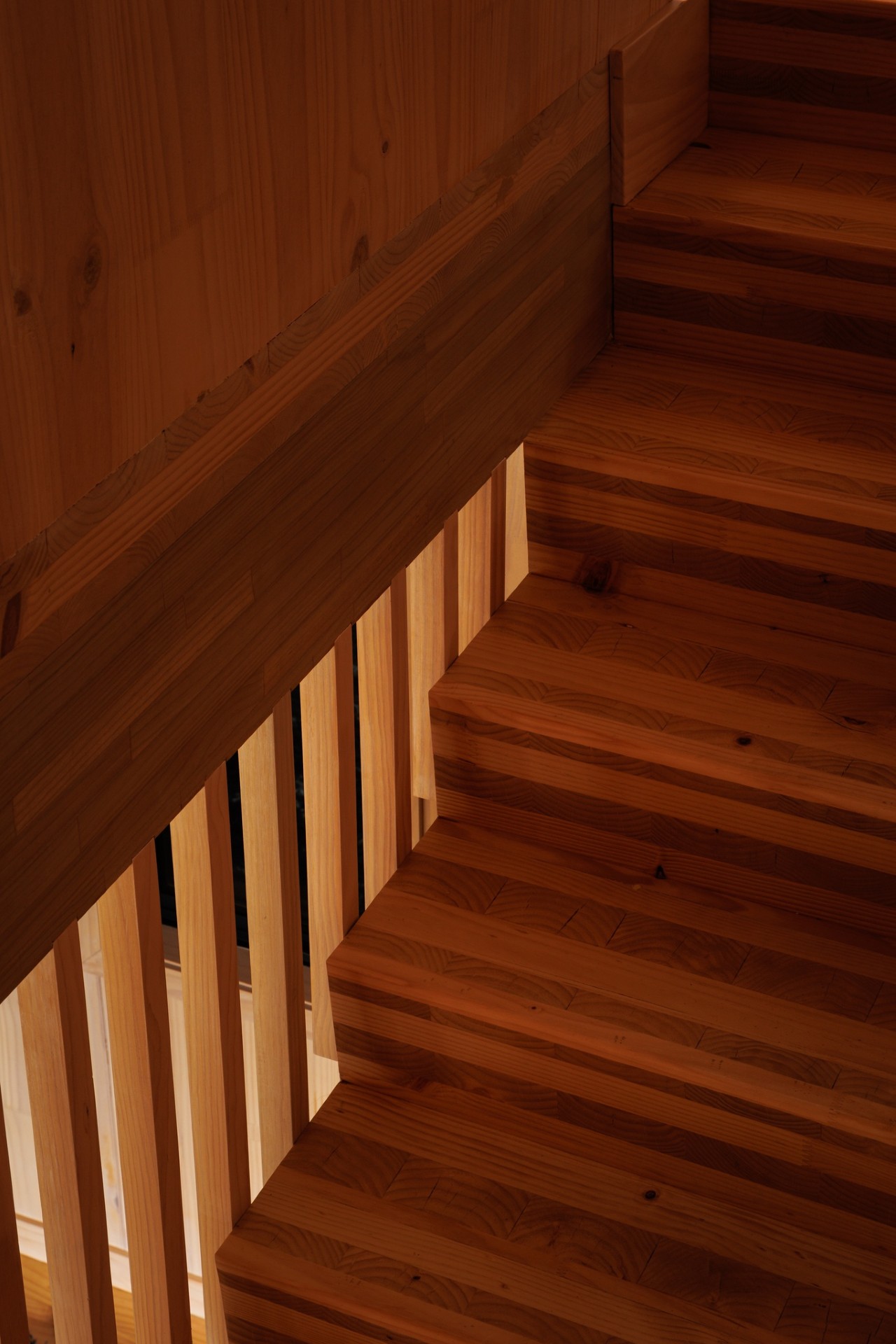
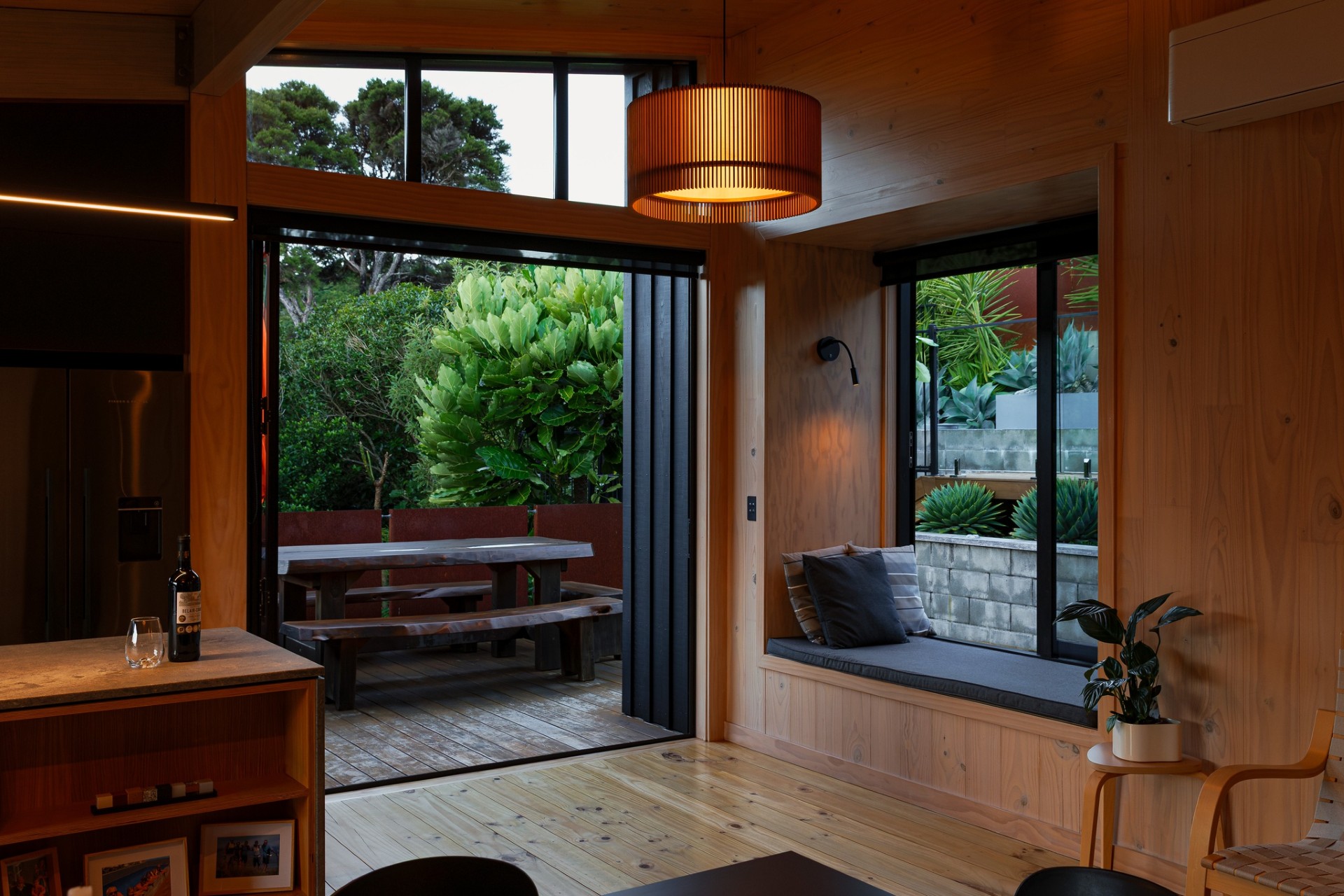
Inside, the light-toned timber structure is left exposed, highlighting craftsmanship and structural clarity. It brings warmth to the interior. It also makes the building logic easy to read — a clear expression of structure and craft that suits a technically-driven approach.
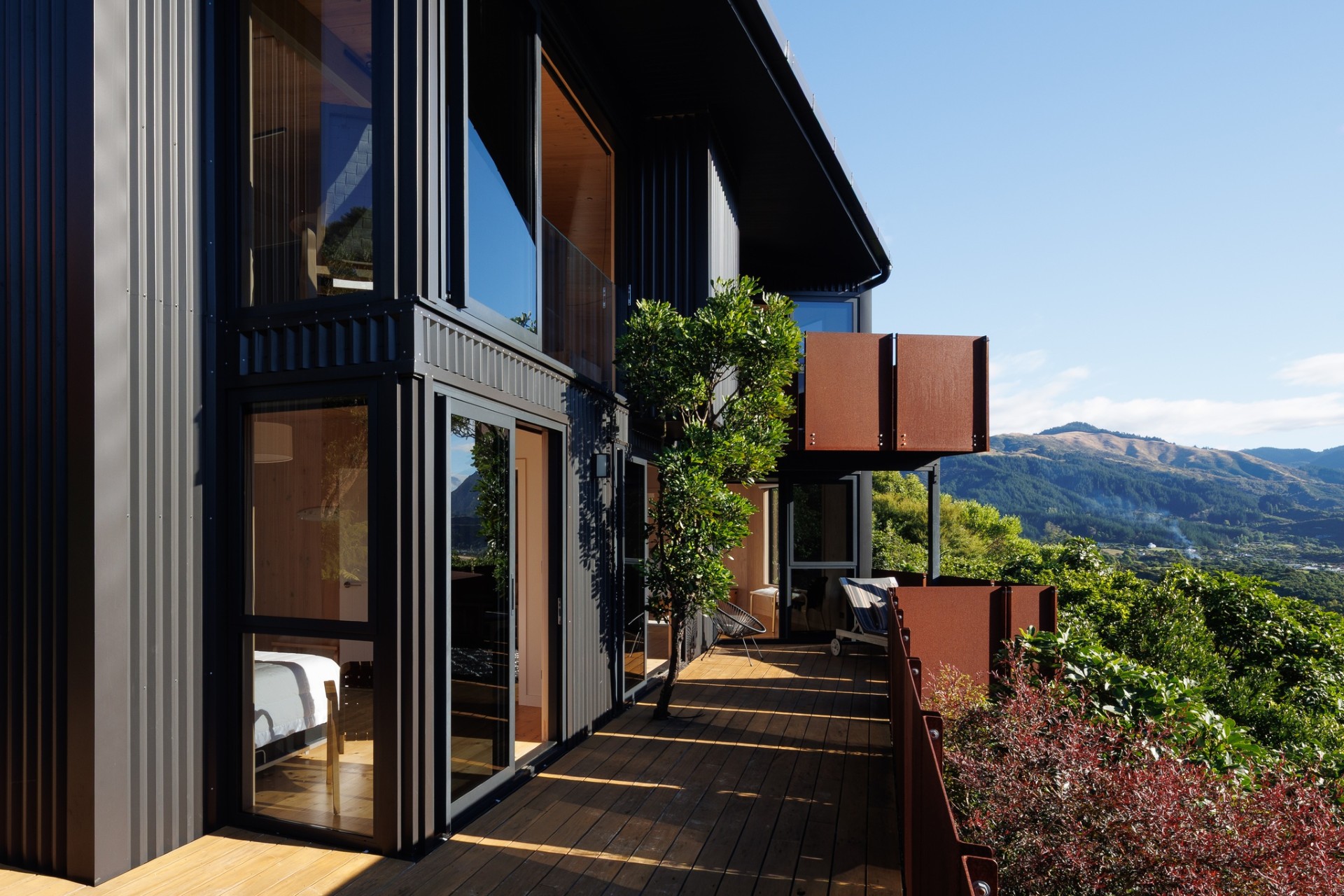
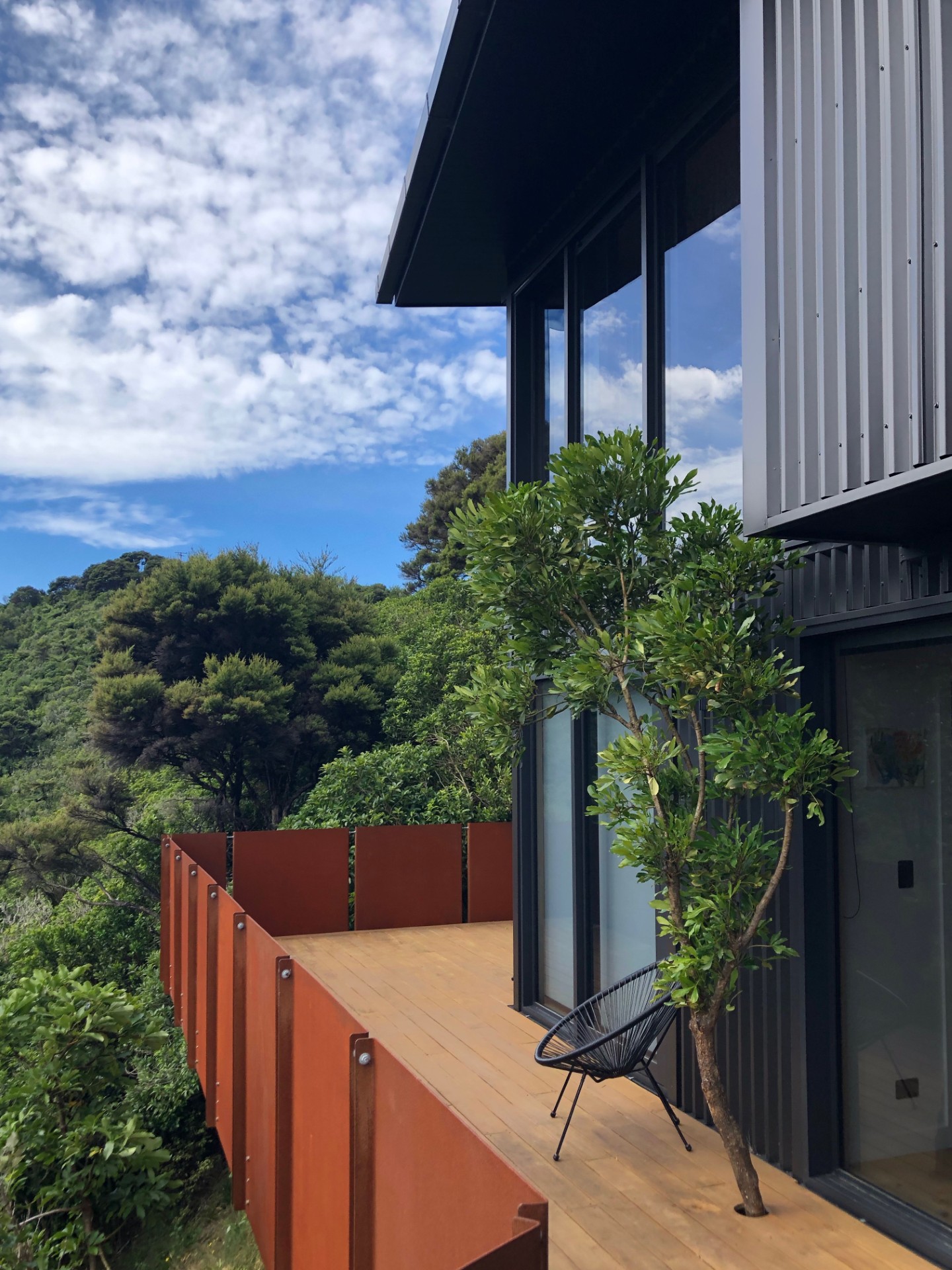
Outside, materials were chosen for long-term performance in a harsh coastal environment. The primary cladding is precoated steel, selected for durability and low maintenance. Corten steel balustrades develop a natural oxidised finish over time, avoiding the need for ongoing coating systems in exposed conditions.
These are the decisions that pay off quietly over the years: fewer repaints, fewer failure points, and materials that weather predictably.
Comfort, performance, and careful window strategy
A high performance home isn’t just about materials — it’s about how the whole envelope works together. In this project, high performance wall systems and thermally-broken joinery were paired with careful detailing to support warmth, durability and weather protection.
Equally important was judicious window placement. The home was designed to capture the extraordinary views across Tata Beach and Golden Bay, without turning the interior into a glass box that overheats. Openings were positioned to balance outlook, sun, shelter and privacy, so the home remains genuinely comfortable throughout the year.
Outdoor living, sheltered options, and the full range of conditions
Wrap-around decks create multiple outdoor living zones. The front-facing decks open to sweeping views across Tata Beach and Golden Bay, while a sheltered rear pool deck provides privacy and calm. The layout encourages you to move with the day — sun, shade, breeze, shelter — so the home feels enjoyable in more than one “perfect” weather setting.
“From sunrise to sunset, every angle connects you to the beauty of Golden Bay.”
Self-sufficiency as a practical advantage
Because the site is remote, self-sufficiency wasn’t just a nice idea — it was a practical part of making the home work well long-term. The project includes:
-
On-site wastewater treatment using a natural treatment system
-
Rainwater collection for on-site supply
These systems support resilience and reduce reliance on external infrastructure — particularly valuable for a coastal retreat where simplicity and reliability matter.
With reliable internet connectivity, key systems can also be checked and monitored remotely when the home isn’t occupied — a practical layer of reassurance for a remote coastal retreat.
What this meant for the owners
All of these decisions created a clearer path through a complex project: a construction method suited to remote conditions, durable materials that reduce upkeep, and a high-performance envelope that supports comfort in all seasons. The result is a home that feels warm and relaxed to live in, while being robust and sensible behind the scenes.
A home designed for certainty, comfort, and long-term durability
This Tata Beach house is a good example of what “high performance” can mean in real terms: choosing a construction method that suits a difficult site, designing the structure and envelope with clarity, selecting durable materials for a coastal climate, and managing complex technical requirements and consents with a steady hand.
For clients who think carefully, ask lots of questions, and want decisions backed by logic and long-term value, this is the kind of process that creates confidence.
Common questions
Why CLT on a remote site?
CLT allowed the structure to be fabricated efficiently in factory conditions and then assembled quickly on site. That’s especially useful in remote locations — and even more so on steep sites where there isn’t a large, level working platform. Prefabrication reduces on-site labour, improves accuracy, and helps keep the build organised and predictable.
How do you manage overheating with big views?
It’s a combination of glazing performance and good restraint. High-performance glazing with low-E glass helps reduce heat build-up. Generous roof overhangs provide shade during summer months. And a point that’s often forgotten: even with great views, you don’t necessarily need wall-to-wall glass. Framing views with carefully sized openings can be just as effective visually, while performing much better thermally.
How do you reduce maintenance in a coastal environment?
Coastal sites can be very exposed, so claddings that need painting or staining often won’t last long between coats. More permanent finishes like precoated steel can significantly reduce maintenance over the life of the home. Salt residue from seaspray can build up over time, so allow for deck access to permit washing of sheltered areas under eaves that aren’t regularly washed down by rain.
Ready to explore what’s possible on your site?
→ Book a free consultation — or call for a quick chat.
Not sure where to start? → Visit Start Here for guidance on each project type, plus the most relevant examples.
