
Would Your House Still Work for You in 10 Years?
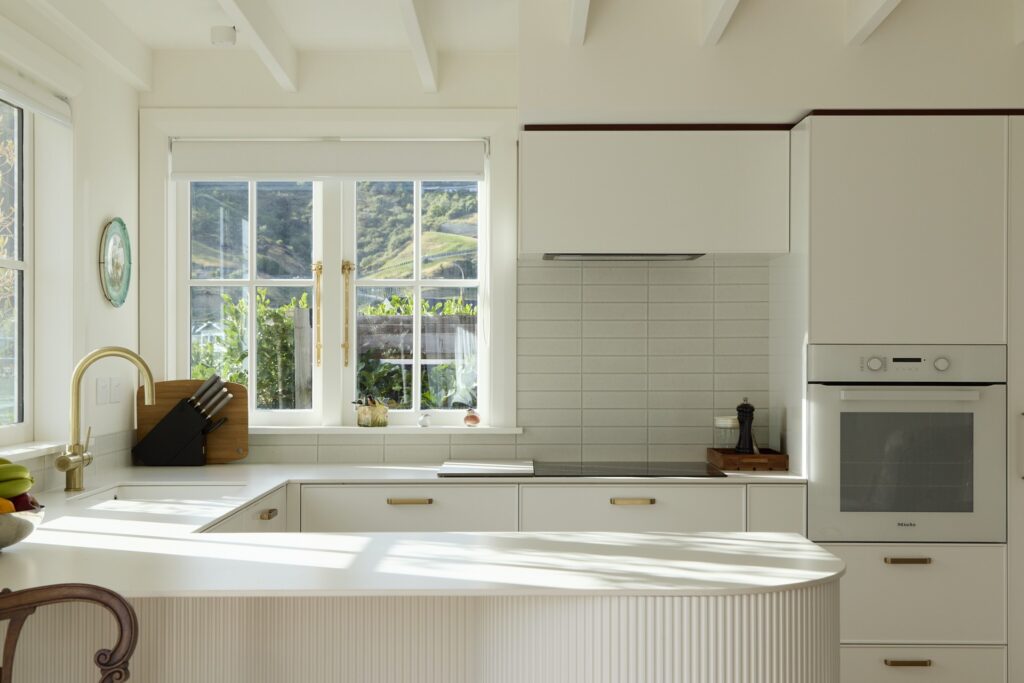
A Christchurch architect’s guide to planning a warmer, more enjoyable home for the years ahead.
Many people don’t suddenly decide they need a different home. More often, the question arrives slowly.
A staircase becomes less appealing. A cold room gets quietly avoided. Maintenance starts to feel heavier. A layout that once worked well begins to feel slightly out of step with how life is now.
But here’s what’s often missed in that moment of reflection: the opportunity isn’t just about making the house work better as you get older. It’s about making it work better for you, full stop — perhaps for the first time.
After decades of sensible family homes shaped around children, practicality and compromise, retirement is often the first time you can genuinely ask: what would this house look like if we designed it around us?
That’s a much more interesting question. And the answer is usually better than people expect.
The most common mistake: solving the wrong problem
After 50 years as a practice working with homeowners on this kind of question, the pattern we see most often is this: people arrive with a clear idea of what the problem is and what the solution should be. They’ve lived in the house for years. They know it intimately. And they’ve reached a conclusion.
Sometimes they’re right. But often, a fresh set of eyes reveals something different.
The perceived problem and the real problem are frequently not the same thing. And committing to the wrong solution — especially an expensive one — can leave you with a flash new living area while the rest of the house still doesn’t work.
The most useful thing we can do at the start of any project isn’t design a solution. It’s look at the house with an open mind and ask what it’s actually capable of.
Before you add space, look harder at what you already have
The instinct, when a house isn’t working well, is to add more. Another bedroom, a bigger kitchen, a new living area. Sometimes that’s the right answer. But more often, the existing house has potential that its owners have stopped seeing.
We’ll always start by asking what value we can extract from the space that already exists — because improving what’s there is almost always more efficient than building more of it.
A good example is the entry sequence in older homes. Houses built in the mid-twentieth century weren’t designed around private outdoor living. The entry path typically ran straight past — or directly in front of — the main living area. That might have seemed unremarkable at the time, but it has two significant consequences: it destroys privacy in the rooms you most want to relax in, and it consumes the best outdoor space with a path that leads to a front door.
The solution isn’t always to just extend the living area. Sometimes it’s to look at the house as if you were designing it from scratch today — and ask where the entry would go. Relocating it to come around the back of the house, perhaps through what was once a laundry or utility space, can instantly transform how the living areas feel. Suddenly the front of the house becomes genuinely private outdoor living. You open the doors and step out without worrying about people walking through your sightlines to reach the front door.
That’s one example. But it’s the kind of thinking — looking at an older house through a modern lens — that can fundamentally change how well it works, without adding a single square metre.
Retirement changes what a house needs to do
There’s a subtler shift that doesn’t get talked about enough: when you retire, you’re actually at home.
Most homes are designed — consciously or not — around how they feel on a weekend, or when you’re entertaining. But when you’re home every day, a different set of qualities starts to matter. How the light moves through the house during the morning. Where you can sit comfortably and look out at the garden. How the house feels on a quiet Tuesday in July, not just on a warm Saturday afternoon in January.
Window seats. A kitchen that faces somewhere worth looking. A connection between the main living area and outdoor space that makes you want to step outside rather than stay in. These are the things that affect daily quality of life when you’re actually spending your days at home — and they’re often the last things to be considered in a renovation.
The seasonal dimension matters too. A house that works beautifully in summer but is dark, draughty and expensive to heat in winter is a house that only works for part of the year. Getting the heating strategy, insulation and solar access right doesn’t just improve comfort — it changes how you feel about being at home.
There’s also a broader principle worth keeping in mind: some investments made now pay dividends precisely when your income is lower. Solar PV panels can be a good example — particularly when you are home during the day and able to use more of the energy as it is generated. Higher-performance cladding is another — it may cost a little more upfront but it lifts the look of the house while significantly reducing maintenance in the years when you’d rather not be up a ladder.
The best upgrades do two things at once
The best upgrades tend to do two things at once: make the house more enjoyable right now, and more practical for the years ahead. A wide hallway becomes a gallery — properly lit, with artwork and objects that matter — generous to live with and easy to move through. A level-entry shower with quality fittings feels considered and luxurious, not clinical. A deck sitting flush with the interior floor feels seamless rather than designed around a constraint. None of these read as concessions. Done well, they feel like the house finally being what it should have been.
Home automation is worth considering in the same spirit. Control of blinds, heating, lighting and ventilation can seem like a luxury, but when it’s well set up it removes a surprising amount of daily friction. Blinds that close automatically as the afternoon sun comes in. Lighting that adjusts to the time of day without you thinking about it. For someone managing a larger home, that kind of quiet automation genuinely changes how easy the house is to live in.
Making the house properly yours
There’s something else worth naming, because it matters and it often goes unsaid.
After years — sometimes decades — of a home shaped around children, practicality and the competing demands of family life, this may be the first time you can make decisions about your home based primarily on what you actually want.
Space for the artwork that’s been in storage. A reading corner with a proper window seat and good light. A kitchen designed around how you cook now, not how you used to feed a family. A guest room that doubles as something useful the other fifty weeks of the year. A garden connection that’s genuinely enjoyable, not just a view through a window you never open.
These aren’t indulgences. They’re the point. And they’re often more achievable than people think — particularly when you’re looking at the house with fresh eyes and thinking carefully about where the real opportunities are.
A recent example: The Red Cottage
A project we completed recently on the Christchurch estuary illustrates how this thinking plays out in practice.
Our clients had loved their small heritage cottage for years — but it was no longer working well for them physically, and they were starting to wonder about the future. Rather than make a single targeted modification, we stepped back and looked at the whole house.
What’s perhaps most instructive about The Red Cottage isn’t what was added — no floor area was gained — but what was transformed. Each existing space was rethought for natural light, outlook and purpose. A small hobby studio was carved out. The kitchen was simplified and made genuinely functional for how the clients actually cook. A compact internal lift was integrated so quietly it’s barely visible in the finished home. The result is a home that feels significantly larger and more generous than its footprint suggests, simply because every part of it is now working properly.
Read the full Red Cottage story →
Where to start
If you’re starting to wonder whether your home will still work for you in ten years, the best first step is usually a conversation. We offer a free initial consultation to help you think through what’s possible and where the real opportunities might be.
Explore Homes for the Years Ahead →
Photography: Sarah Rowlands
