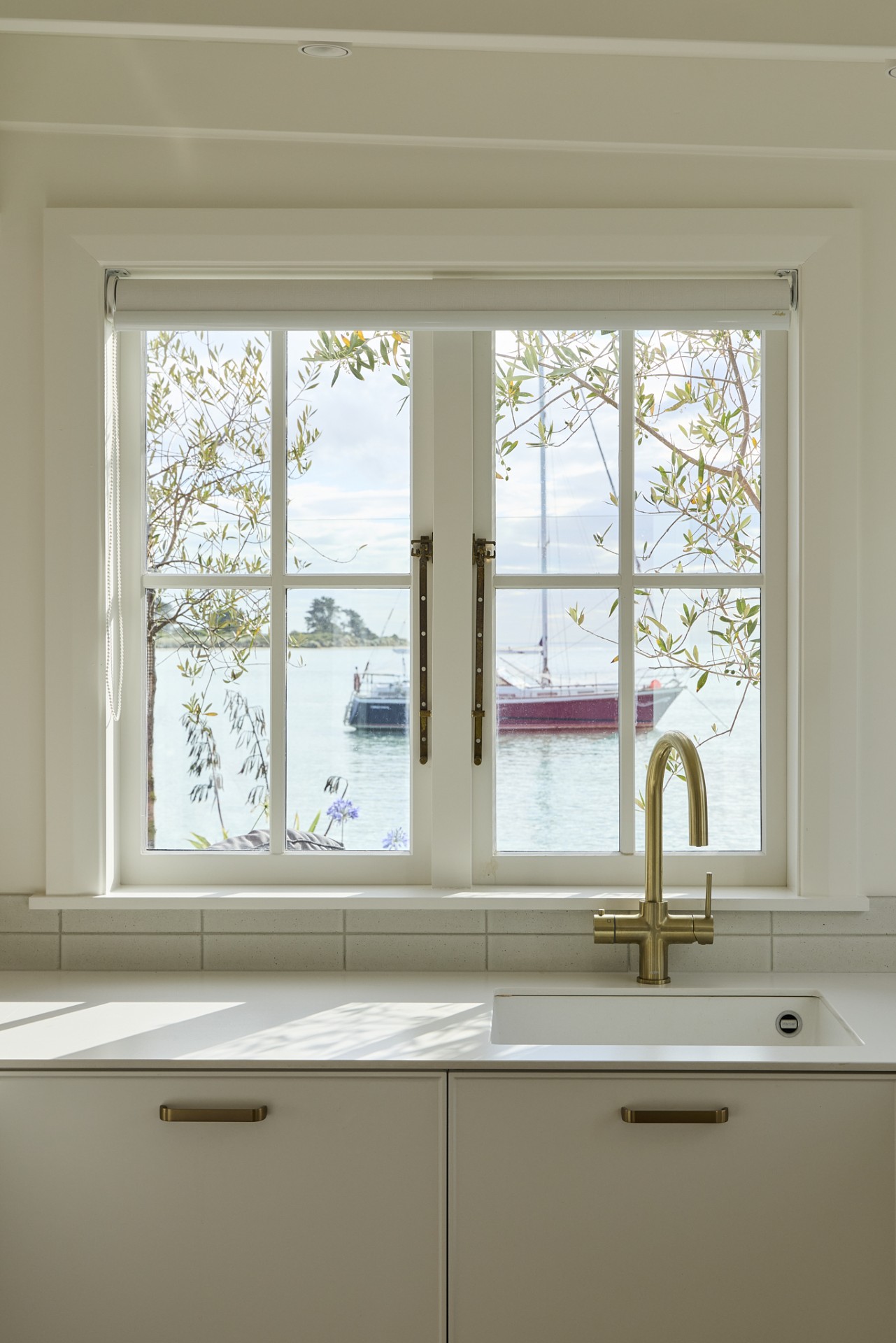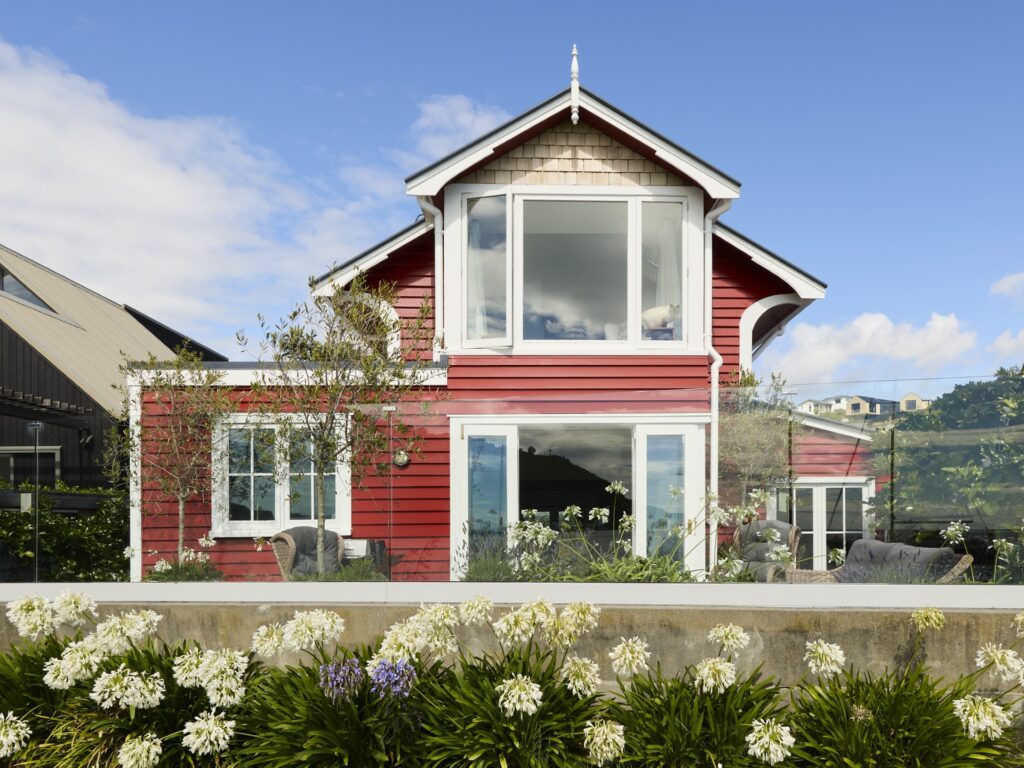
NZIA Canterbury Architecture Awards Shortlist 2026 · Character home renovation · Ageing in place | A tiny cottage on the estuary shore — calm white rooms washed in dappled light, a quiet setting for watching tides and boats, or opening to the private garden sanctuary behind. Read our clients’ story below.
A character cottage in Redcliffs, renewed from the inside out
Some houses are loved from a distance long before they are ever lived in.
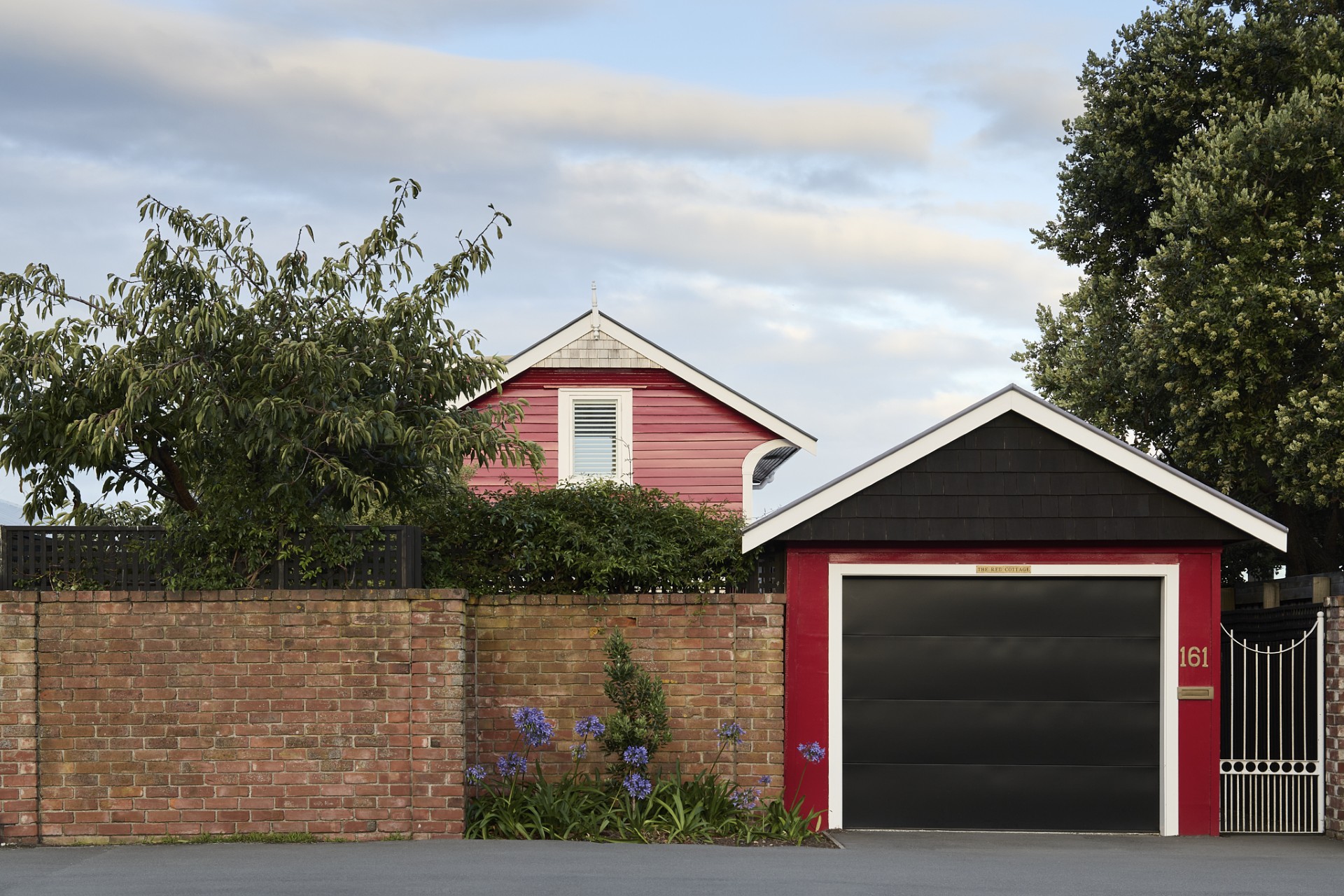
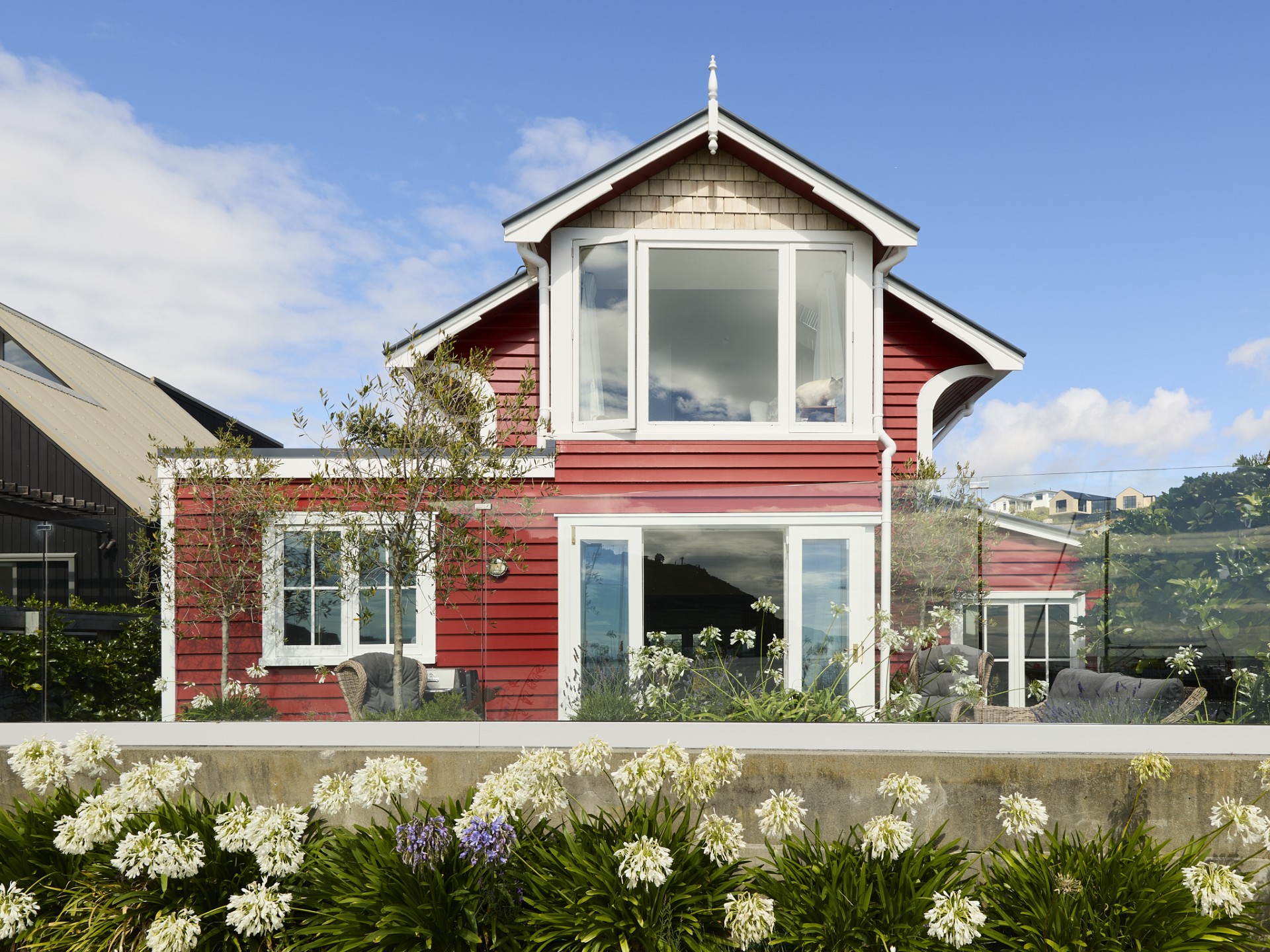
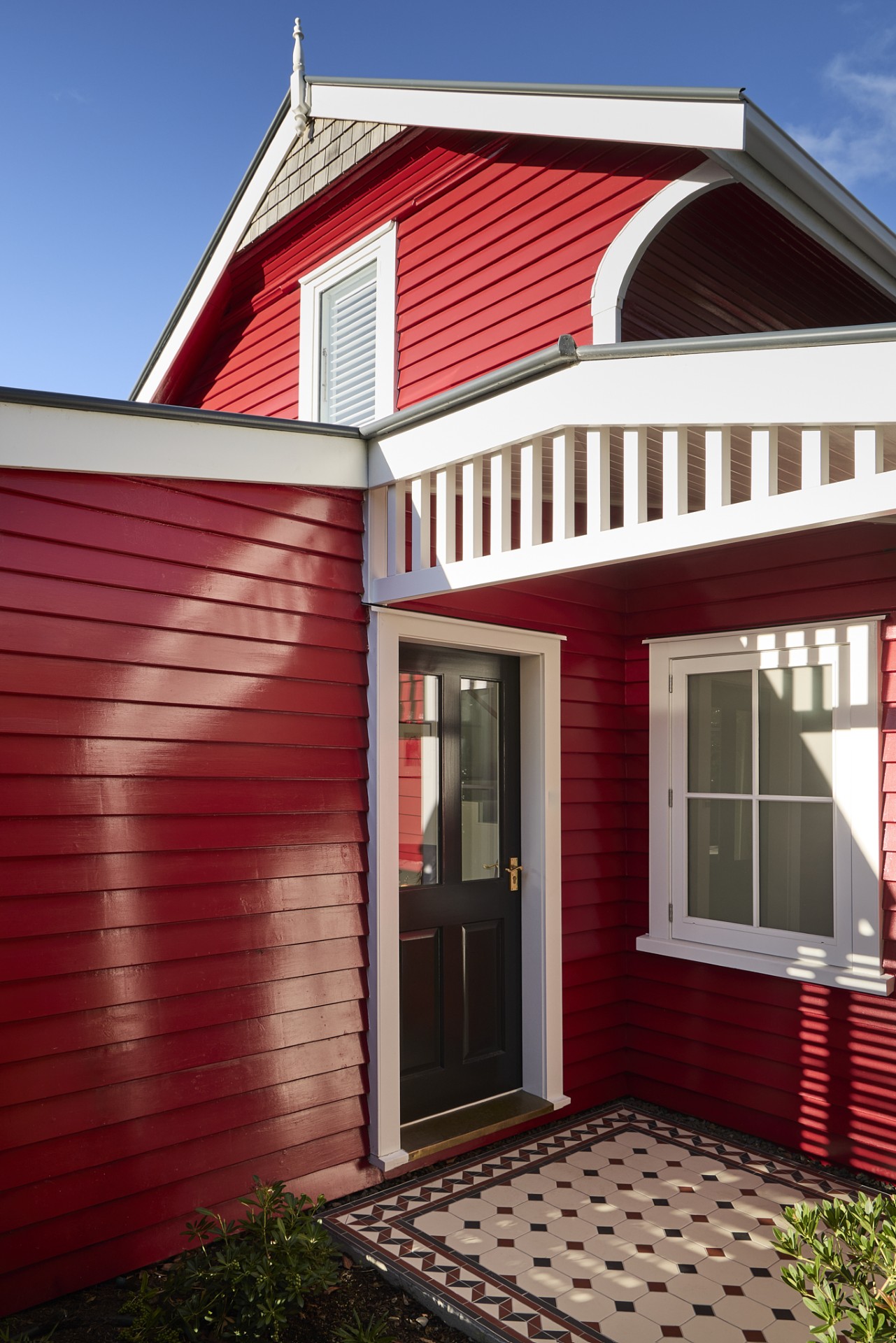
For Rose and Bill, The Red Cottage was one of those. From across the estuary, it had always been there — compact, symmetrical, quietly confident behind its brick wall. When it finally came available, the decision felt almost inevitable.
“We had admired the cottage for many years from across the bay,” Rose says. “So when it became available we thought it would be a good place to retire — with the amazing views and activity happening all around us to keep us engaged as we got older.”
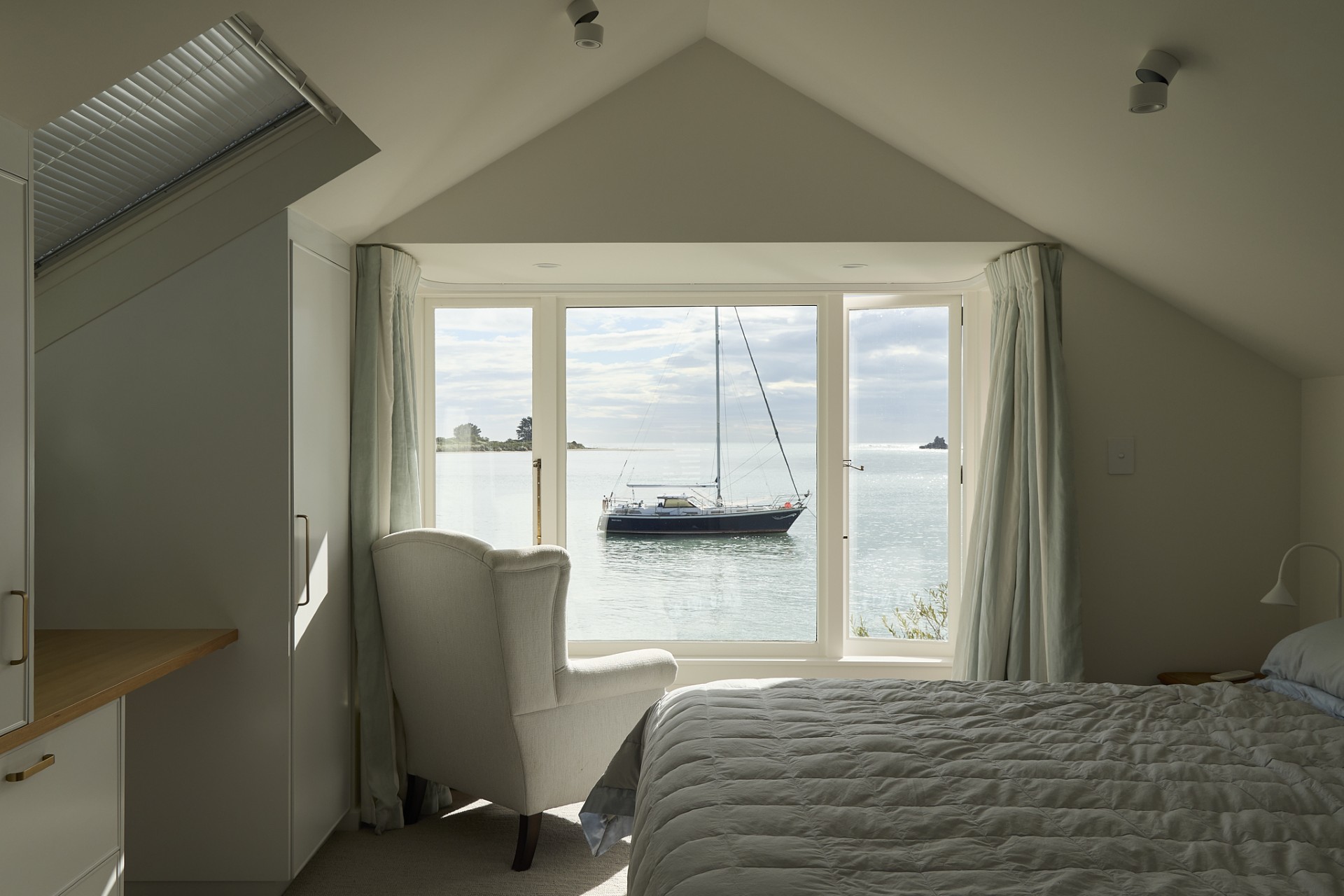
The setting was everything they had hoped for. The estuary light, the movement of boats, the glimpse of Shag Rock across the water at Sumner Beach. But stepping inside, time told a different story. Built around 1917, the cottage had been added to incrementally across the decades — a seawall raised in the 1940s that swallowed the original outlook, rooms added in the ’80s and ’90s that made the plan longer but also darker and more convoluted. What had once been a simple, clear little house had become a series of split levels and awkward transitions, a home that asked something of you every time you moved through it.
“Our biggest aim was to make it accessible so we can live here through our retirement safely and comfortably.”
Stepping back before stepping in
The brief, at first, seemed focused on a specific problem: a safer stair, and a lift. But before drawing a single line, we stepped back.
The split levels weren’t just an accessibility inconvenience — they were a symptom of a century of patching. Four small living areas had accumulated where one generous space might have served. Too much of the plan was given over to moving between rooms rather than living in them. And the cottage’s greatest asset — that remarkable estuary outlook — was barely accessible from the rooms where Rose and Bill would spend most of their time.
If we were going to open up the floor structure and deal with the vertical movement problem properly, we had a rare chance to rethink the whole interior. So that’s what we did.
The lift: present, not dominant
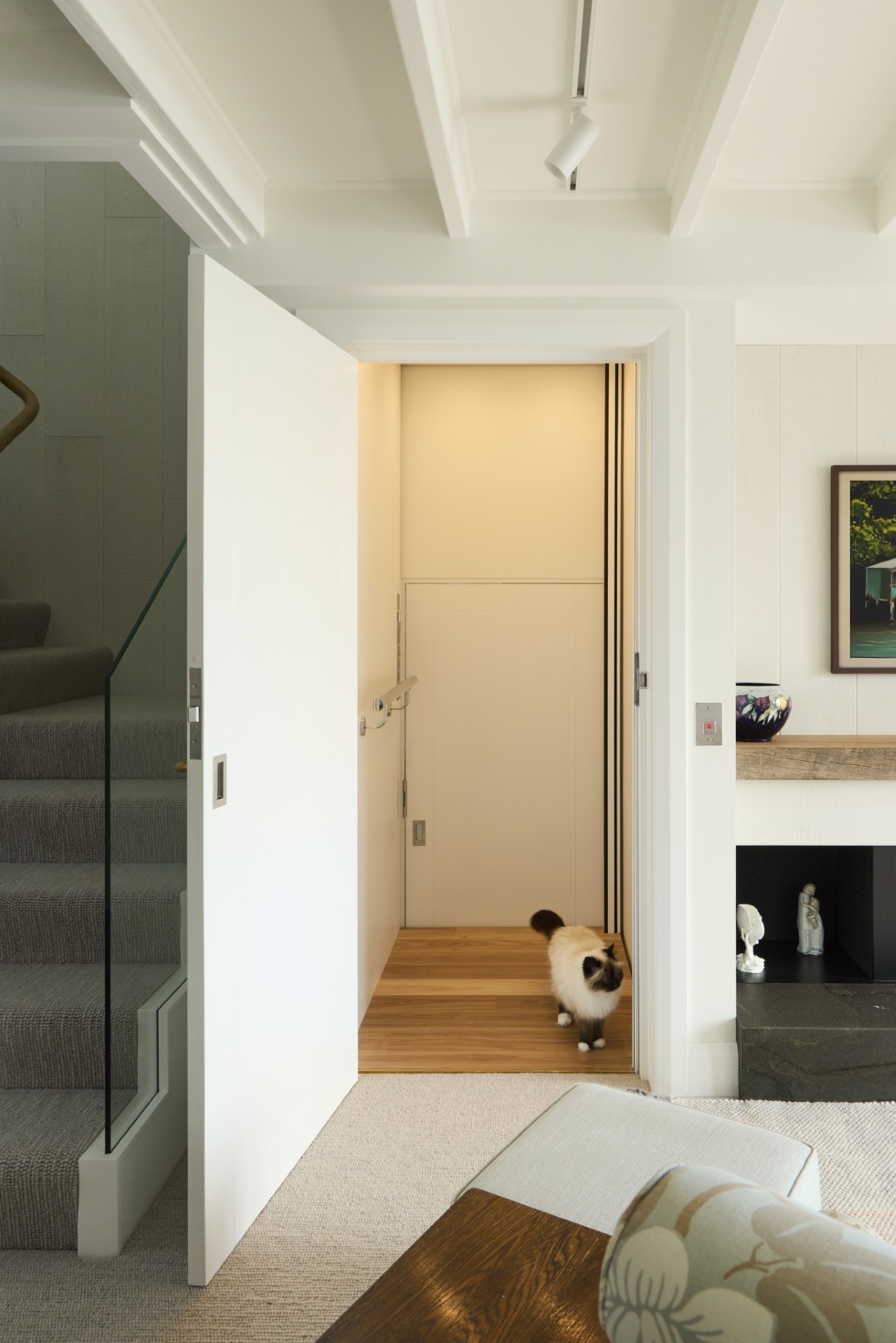
A lift was always central to the brief — not as a luxury, but as the difference between this home working for the years ahead or not.
“The lift has been a major part of making our lives easier and safer and will continue to do so as we age,” Rose says. “The lift was critical to the build as stairs are becoming more difficult to climb.”
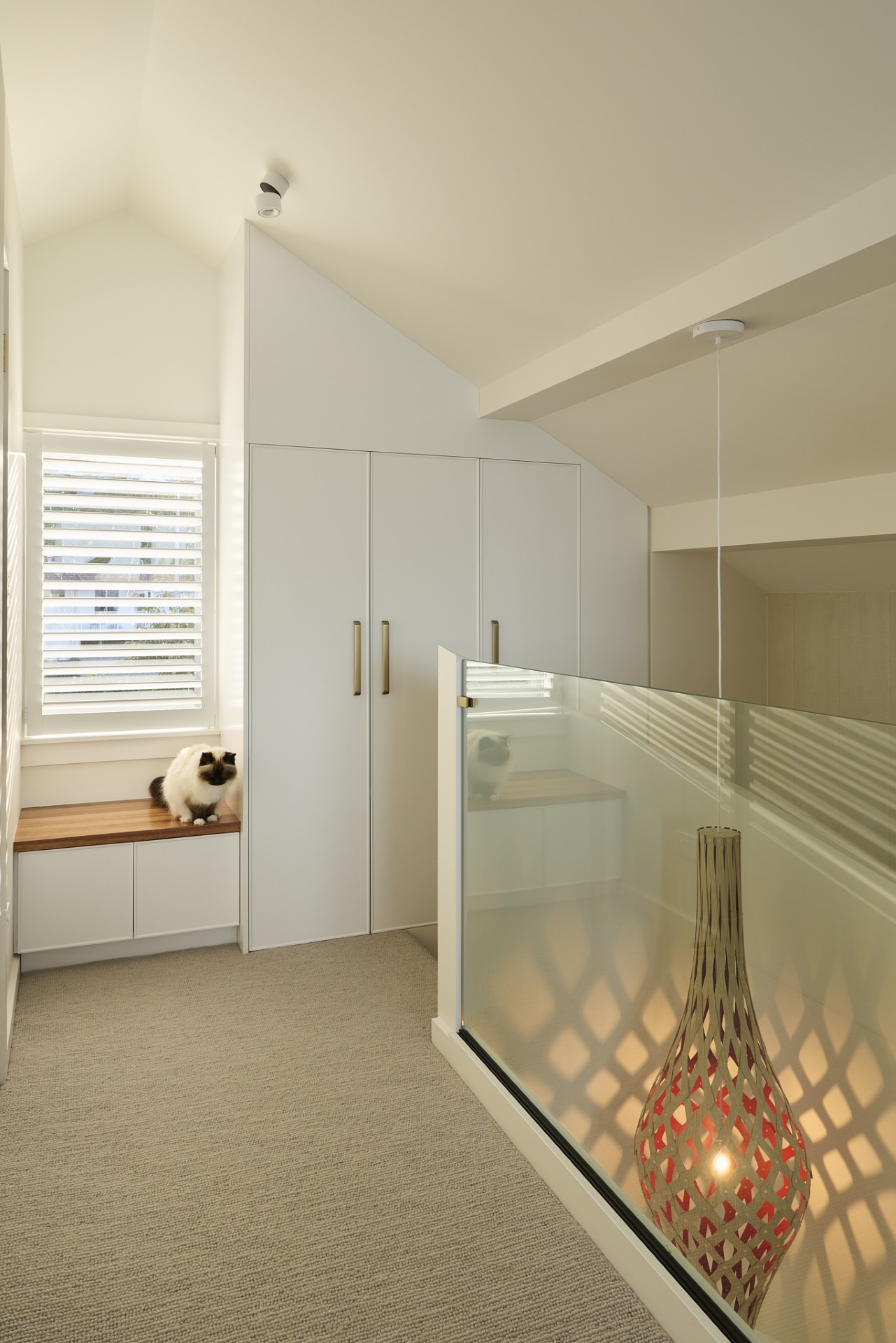
What Rose and Bill watched take shape — lift, stair, and existing structure all resolved within the tight geometry of a small cottage — was of course very carefully planned, and doordinated with the required structure. The lift is threaded discreetly through the split levels — entered at the lower floor from what is now a daylit art studio, a space that emerged almost as a gift from the replanning, with quiet, considered doors at each level above. Upstairs, you’d barely know it was there. Even Holly the cat is often spotted waiting patiently for a ride up to her favourite sunny chair in the bedroom.
The stair: a lightwell at the heart of the home
If the lift is the pragmatic solution, the stair is its architectural counterpart — and the move that transforms the whole house.
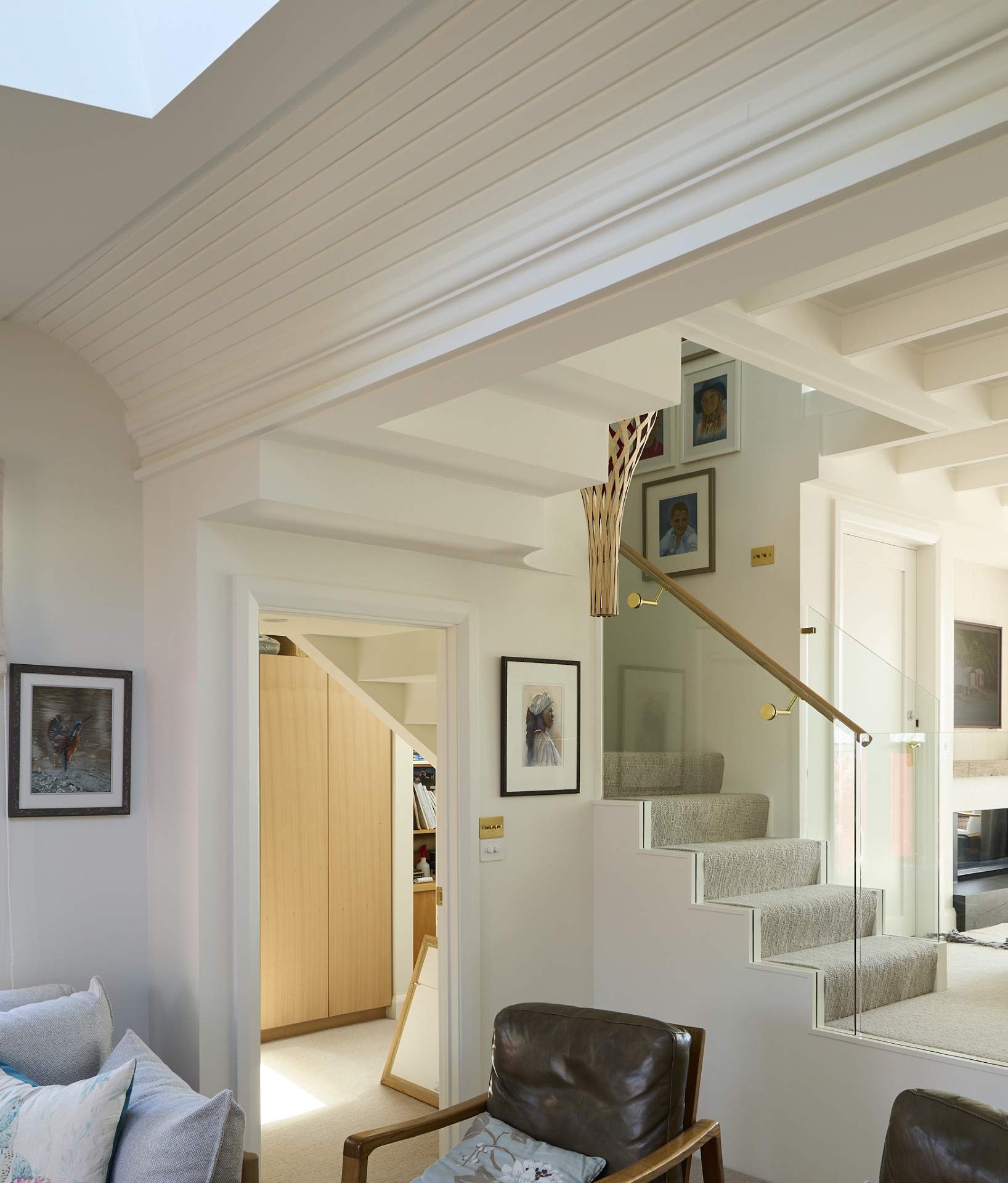
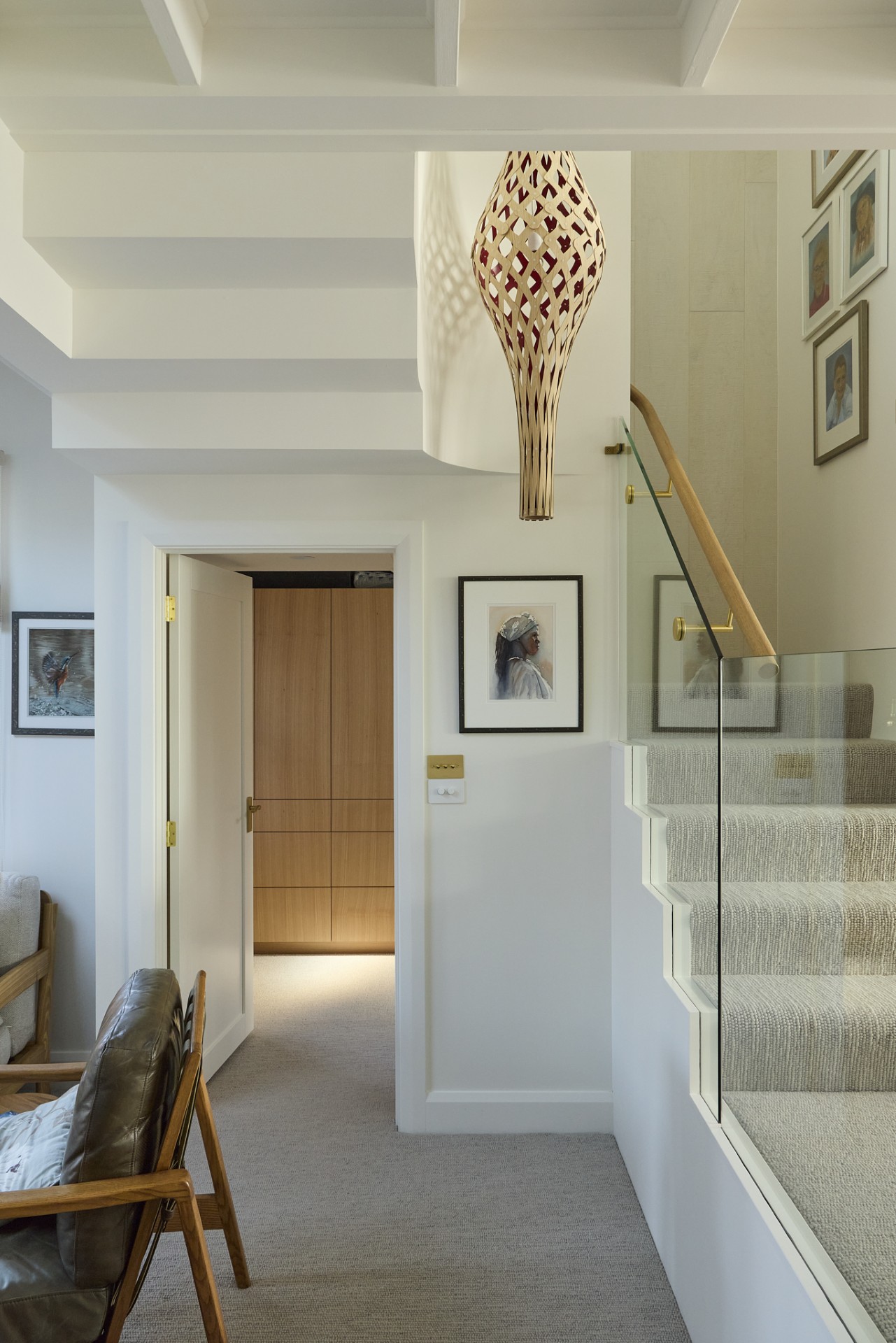
Rather than making the new stair as compact as possible, we did the opposite. Short flights wrap an open central core, with the stair becoming a lightwell: daylight drawn down from above, washing across the planes and curves of the structure, spilling into the living areas below. A curved soffit from the cottage’s original eaves line survives in the sitting room as a surface for gentle uplighting. New structure is detailed to stitch neatly into the original exposed floor framing — the intervention reads as continuation, not addition.
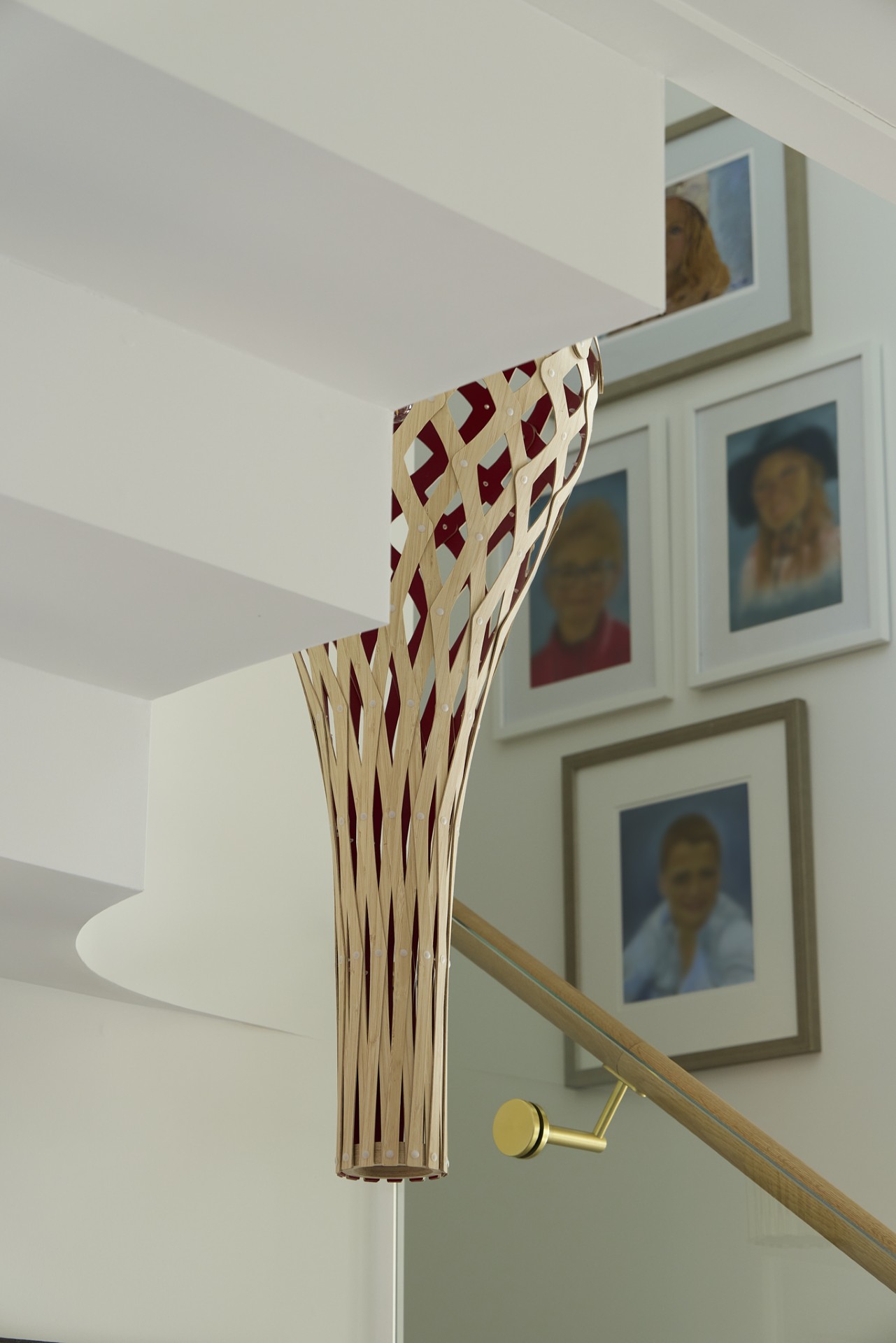
Suspended in the void is a David Trubridge pendant, its interior custom painted to match the cottage’s bold red exterior. As Rose and Bill notice: “It adds a warm glow to the room and casts interesting shadows in the stairwell and surrounding walls.”
The effect extends upward too. “The stairs open into the bedroom, which has been opened up with a glass balustrade — this makes the bedroom feel more light and spacious.”
Where there was once a chain of awkward half-levels, the house now breathes. Light from the stair core reaches both levels simultaneously, the two floors held together by this single luminous element at the home’s centre.
Opening out to the estuary
To complete the rework, we raised the kitchen and living areas to the existing raised platform level — restoring the outlook the seawall had taken away eight decades earlier, and finally giving the main living spaces the connection to water and sky that had always been the cottage’s promise.
The difference, living with it, is exactly what you’d hope for. “Now that we have been living in the house for a while we are finding that the changes have improved the light in the downstairs area,” Rose says. “With it being opened up and the glass balustrade downstairs, it’s light and airy — and with the kitchen having been lifted to the same level it is much more spacious.”
And the views that drew them to the cottage in the first place? “The views are now very much a part of our everyday life. We enjoy watching the yacht races and the big ships anchored out at sea.”
Designed for the years ahead
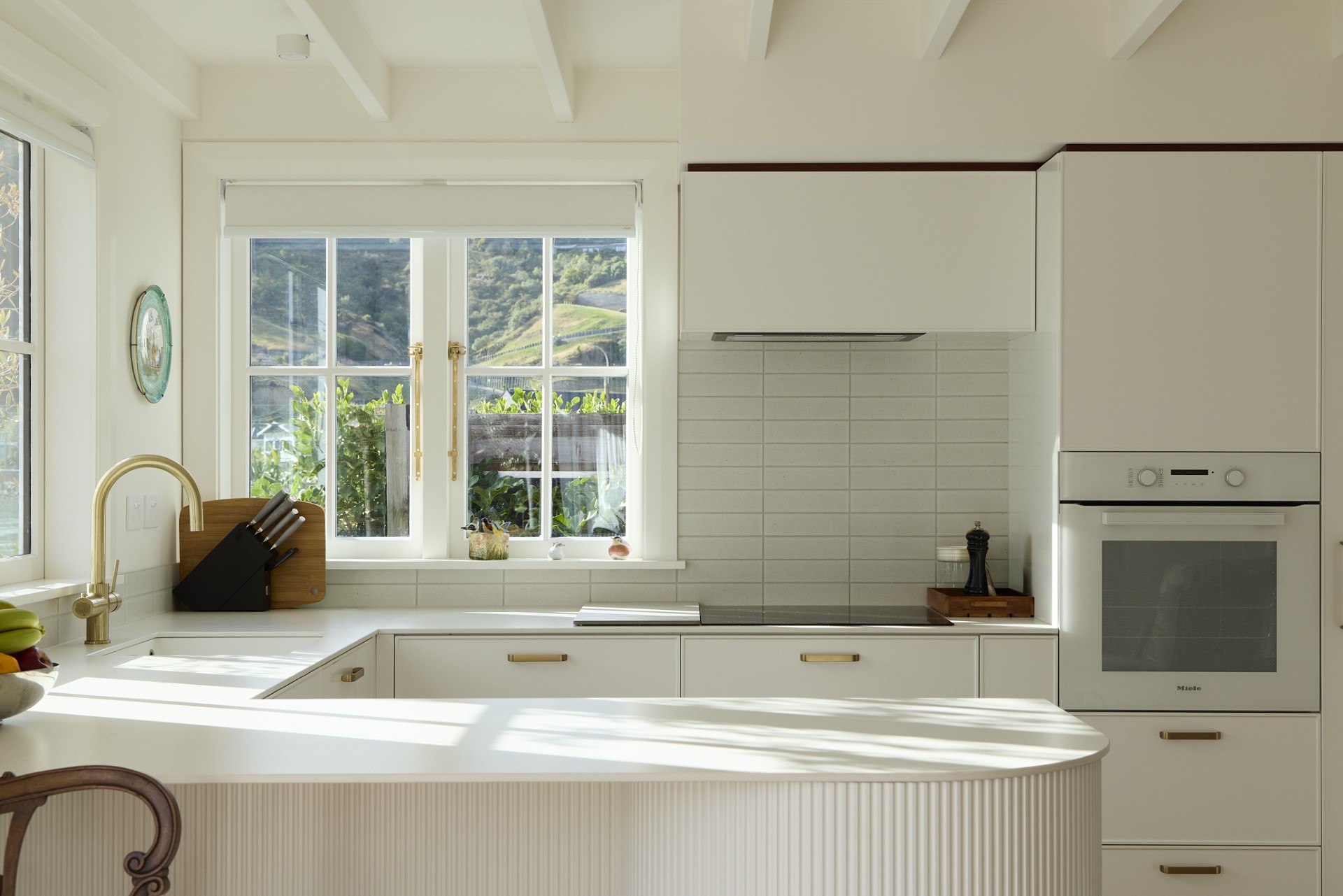
Accessibility here isn’t an afterthought — it runs through every decision. The kitchen was designed with wheelchair access in mind: bench heights and appliance placement considered carefully so that the space works easily now, and continues to as needs change.
The cottage’s services were quietly upgraded: existing timber windows retained and reglazed for better thermal performance, a concealed ducted heat pump providing even, efficient heating without cluttering the rooms.
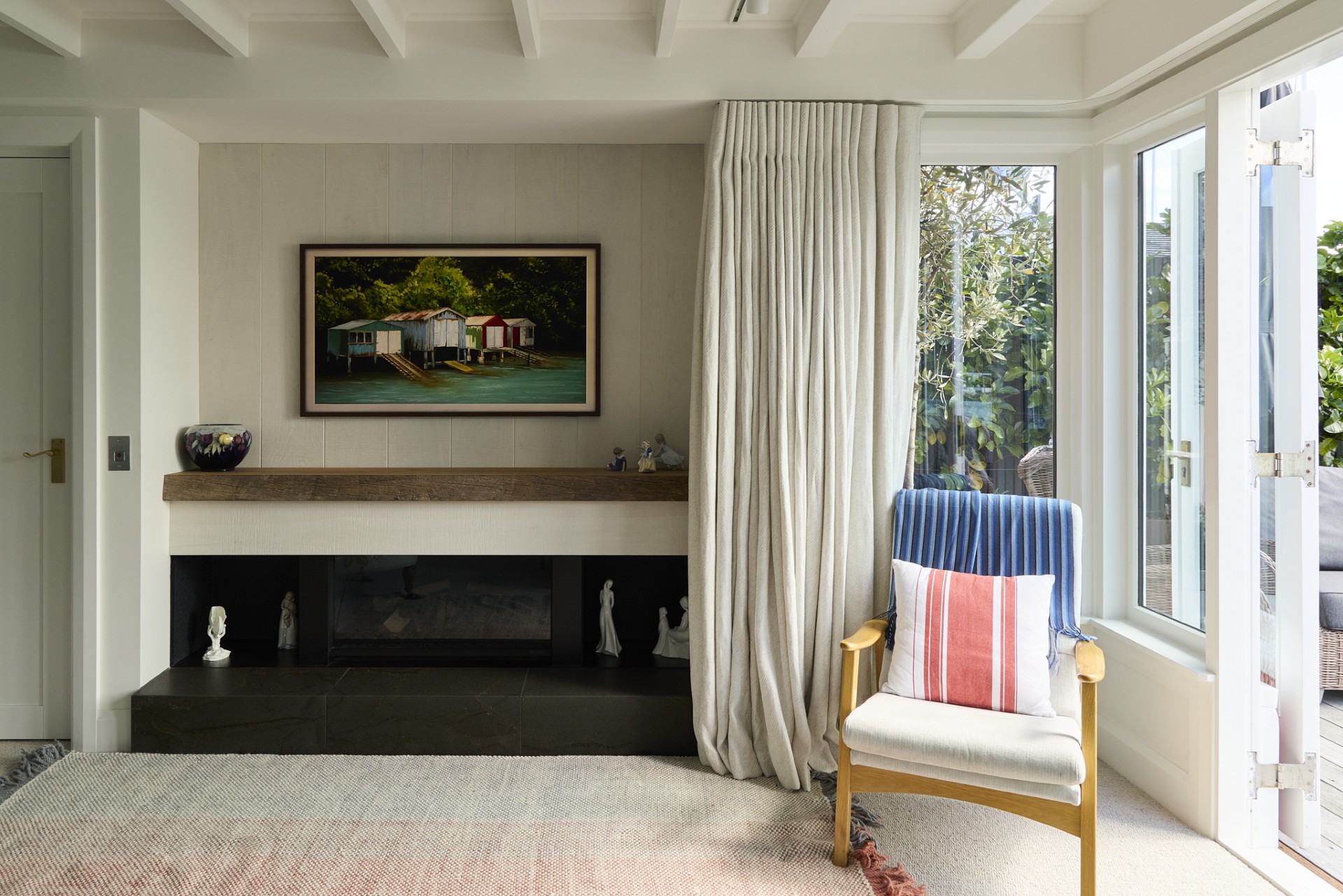
New materials are quiet companions to the existing character and coastal setting: sandy-toned wool carpet, whitewashed oak panelling, warm timbers and brass. Nothing announces itself. The light that moves through the house — drawn in by the stair, reflected off the water, shifting through the day — does the work instead. It’s the kind of light that shows artwork well, and Rose’s own paintings, many of them made in the studio below, are naturally at home on the walls.
Supported through something complex
A renovation at this level of precision requires more than good design. It requires coordination across engineering, geotechnics, and construction — and a practice willing to hold the thread all the way through.
Rose and Bill chose a full-service approach, and reflect that it made all the difference.
“We found the design process stimulating and the architects supportive throughout. Being older we opted for the full service offered, which we are pleased we did — we needed that support to handle the complex engineering and design decisions. We could not have done it without their expertise.”
A character home, ready for the years ahead
The Red Cottage remains the small, charming seaside cottage Rose and Bill admired from across the bay. From the street, almost nothing has changed. But inside, a lifetime of accumulated compromises has been resolved in a single, considered set of moves — and the cottage is finally as generous as its setting always promised.
The Red Cottage has been shortlisted for the NZIA Canterbury Architecture Awards 2026.
Thinking about a home for the years ahead?
The best time to explore the options is before the decisions feel urgent. Whether you are weighing up a character home that needs adapting, or thinking about how your current house could work better as life changes, we can help you understand what is realistic — and what is possible — early in the process.
→ Explore Homes for the Years Ahead
Photographer: Sarah Rowlands
Contractor: Steve Brown Builders
Structural Engineers: Lewis and Barrow